
Ceiling Insulation in Calabasas, CA
Energy-Saving Ceiling Insulation for Calabasas, CA Homes — Licensed & Insured
Need ceiling insulation in Calabasas, CA? Best Price Insulation offers expert installation, removal & replacement. Free estimates. Call (818) 696-4154 today.
Ceiling insulation is the thermal and acoustic barrier installed between your living space and the structure above it — whether that’s an attic, a flat roof deck, or an upper floor. In Calabasas, CA, where summer temperatures routinely exceed 100°F in the inland valleys and the Santa Ana winds drive dramatic seasonal temperature swings, ceiling insulation is one of the highest-impact home performance upgrades available to homeowners.
Best Price Insulation serves the entire Calabasas area, providing professional ceiling insulation installation, replacement, and removal for single-family homes, luxury estates, gated community residences, and commercial properties. Our team understands the specific building styles prevalent in Calabasas — from the ranch-style homes near Old Calabasas Road to the newer Mediterranean-inspired estates in The Oaks and The Classics — and we tailor every installation to the structure, the climate zone, and the homeowner’s energy goals.
Read moreShow less
Whether you’re dealing with skyrocketing cooling bills, uneven room temperatures, or aging insulation that’s past its useful life, Best Price Insulation delivers solutions built for Calabasas conditions. Call us today at (818) 696-4154 to schedule a free assessment.
Understanding Ceiling Insulation in Calabasas, CA
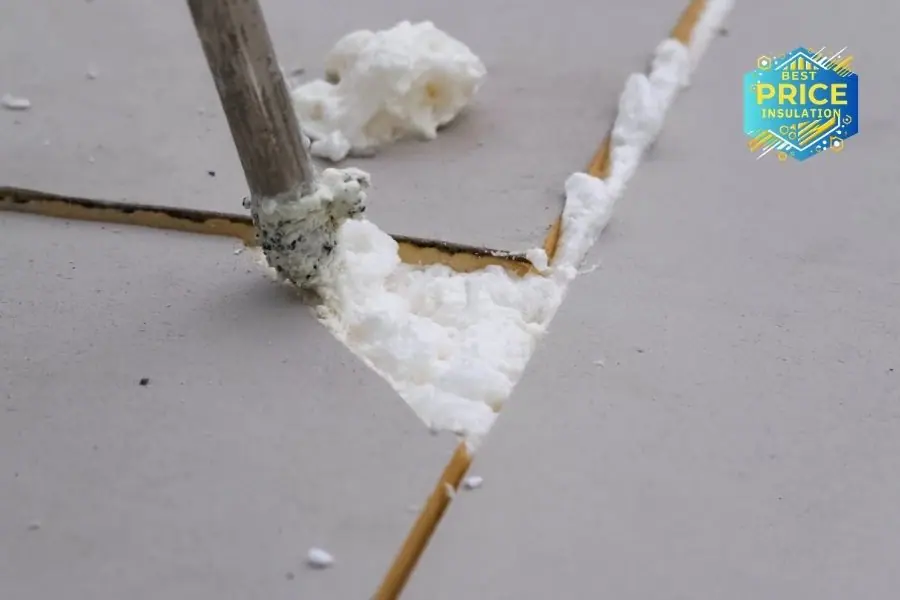
Ceiling insulation works by resisting the transfer of heat between conditioned living spaces and unconditioned areas above them. Heat naturally moves toward cooler spaces, which means during a Calabasas summer, radiant heat from your roof deck and attic space continuously tries to push through your ceiling into the rooms below. Without adequate insulation, your air conditioning system works overtime — and still struggles to maintain comfort.
The concept of insulating building envelopes dates to early 20th-century construction practices, but modern insulation materials and installation techniques have evolved dramatically. Early Calabasas homes built in the 1950s and 1960s — many of which still stand in the older sections of the city near Calabasas Road and Mulholland Highway — were often built with minimal insulation by today’s standards, sometimes as little as R-11 batts in the ceiling, or in some cases no insulation at all in enclosed soffits and flat-roof sections.
Read moreShow less
California’s Title 24 Building Energy Efficiency Standards, which have been progressively tightened since their first adoption in 1978, now require ceiling insulation levels of R-38 or higher in Climate Zone 9, which covers Calabasas. Many older homes in the city fall far below this threshold, creating both comfort problems and unnecessary energy expenditure.
Ceiling insulation is distinct from attic insulation in an important technical sense: attic insulation typically refers to insulation laid on the attic floor (your ceiling’s top surface), while ceiling insulation can also refer to material installed directly against roof rafters or between ceiling joists in rooms with no accessible attic above them — a common configuration in portions of Calabasas homes with vaulted ceilings, low-pitch roofs, or room additions.
The building stock in Calabasas is diverse. The city includes tract homes from the 1970s and 1980s, custom-built estates from the 1990s and 2000s, and newer construction in developments like The Oaks at Calabasas and Calabasas Park Estates. Each era of construction brings different insulation challenges, materials, and upgrade pathways. Understanding these distinctions is essential to selecting the right insulation method and achieving the best long-term results.
Why Ceiling Insulation Is Needed in Calabasas, CA
Extreme Summer Heat
Calabasas sits in Climate Zone 9 under California’s Title 24 framework, a designation that reflects the area’s combination of hot, dry summers and mild but variable winters. During peak summer months, ambient air temperatures in Calabasas regularly reach 100°F to 108°F, and attic air temperatures can climb to 150°F to 160°F above poorly insulated ceilings. When insulation is degraded or undersized, radiant heat transfer through the ceiling can raise indoor temperatures by 10°F to 15°F even with air conditioning running, dramatically increasing cooling loads and utility costs.
Santa Ana Wind Events
Calabasas experiences some of the most intense Santa Ana wind events in Los Angeles County. These offshore, downslope winds — which typically occur between October and April — can bring temperatures exceeding 90°F in December and reduce relative humidity to below 10%. Beyond the well-documented fire risk they create in the adjacent Santa Monica Mountains and Las Virgenes Canyon areas, Santa Ana conditions cause rapid and dramatic temperature swings that stress building envelopes. Homes with inadequate ceiling insulation lose conditioned air rapidly during these events, as the temperature differential between inside and outside can shift by 30°F to 40°F within hours.
Wildfire Smoke and Air Quality Events
The Woolsey Fire of November 2018 burned approximately 96,949 acres and came within blocks of residences in Monte Nido, Hidden Hills, and the Mulholland Corridor near Calabasas. The fire caused widespread evacuation of Calabasas zip codes 91302 and 91372. In the aftermath, many homeowners discovered that smoke infiltration had contaminated attic insulation — particularly older fiberglass batt insulation — requiring full removal and replacement. Smoke odor and particulate matter absorbed into degraded insulation can persist for years and re-enter living spaces. Replacing compromised insulation with properly sealed spray foam or blown-in products is a critical post-fire remediation step for Calabasas homes.
Aging Housing Stock and Settling Insulation
A significant portion of Calabasas homes were built during the 1970s and 1980s in developments like Calabasas Park and along Agoura Road. Blown-in fiberglass and rock wool insulation installed during this era has had decades to settle, compress, and degrade. Settled insulation loses R-value — a blown-in product that started at R-19 may now perform at R-13 or less. In neighborhoods like Malibu Junction and the older tracts near Park Sorrento, this settling problem is widespread and contributes directly to high summertime energy bills.
Building Code Compliance
Homeowners in Calabasas undertaking permitted renovations, room additions, or re-roofing projects are required under current California Title 24 standards to upgrade ceiling insulation to a minimum of R-38 in Climate Zone 9. Many homeowners are unaware of this requirement until they’re mid-project, creating costly delays. Proactive insulation upgrades before beginning a renovation avoid compliance headaches and maximize the energy efficiency of the completed project.
Free, no-obligation estimates
Talk to Best Price Insulation
Tell us what you need and we’ll take it from there.
Signs You Need Ceiling Insulation Service in Calabasas
Energy and Comfort Indicators
- Monthly cooling bills exceeding $250–$350 during July and August in a typical Calabasas single-family home
- Rooms directly below the roofline or attic that remain 5°F or more warmer than the rest of the house
- HVAC system cycling on and off every 10–15 minutes during afternoon heat peaks
- Noticeable temperature differences between the first and second floor of a two-story home
Physical and Visual Symptoms
- Visible settling or voids in attic insulation when viewed from the attic access hatch
- Insulation that appears flattened, discolored, or contaminated with dust and debris
- Evidence of rodent activity, nesting material, or pest damage within attic insulation
- Water stains on insulation batts from past roof leaks or condensation events
- Smoke odor detectable in upstairs rooms, particularly following wildfire events in the Santa Monica Mountains
Urgency Indicators
- Home was built before 1990 and insulation has never been upgraded
- You are planning a permitted re-roof, addition, or HVAC replacement that will trigger Title 24 compliance review
- Attic insulation depth is less than 10–11 inches (the approximate threshold for R-38 blown-in fiberglass)
Ceiling Insulation Methods and Approaches
Blown-In Fiberglass or Cellulose Insulation
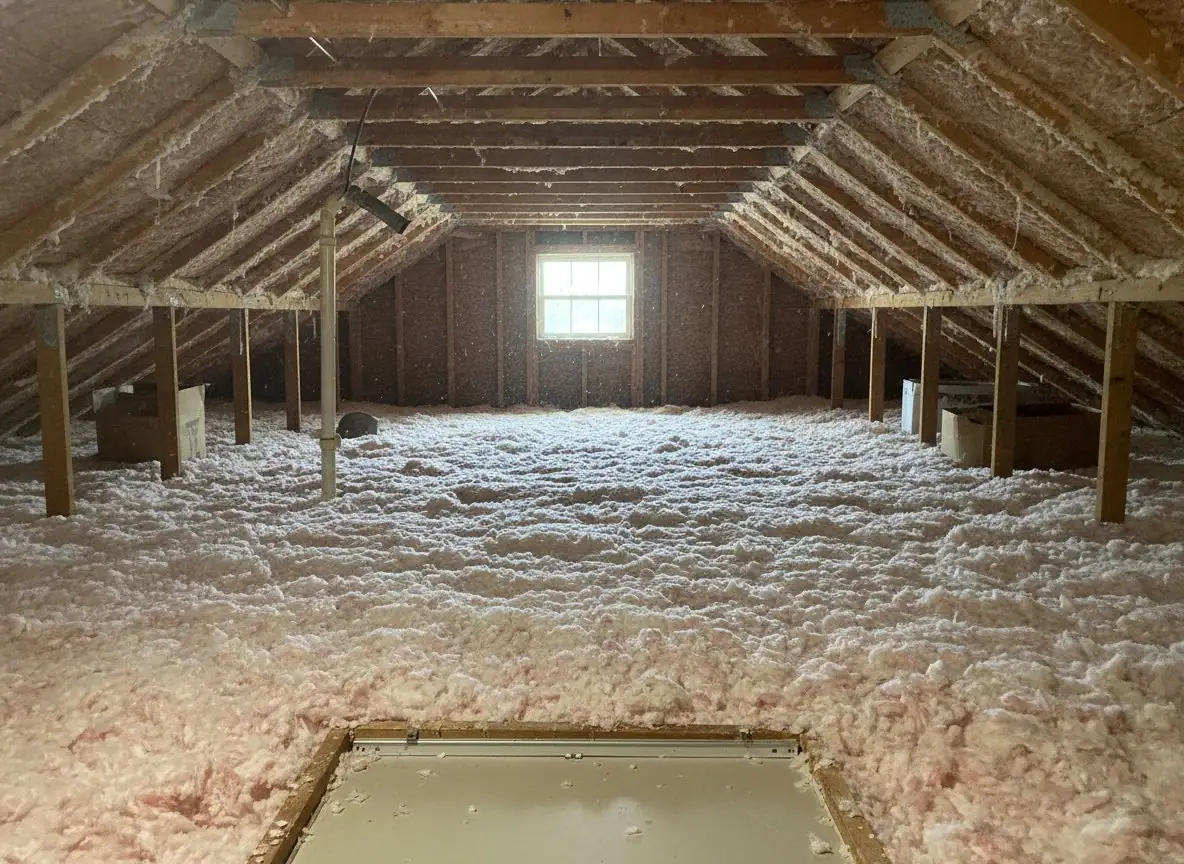
The most common method for Calabasas attic ceiling insulation upgrades. Loose-fill material is blown in over the attic floor to achieve R-38 to R-60 in one continuous layer. Blown-in cellulose is particularly effective in older Calabasas homes where irregular joist spacing and existing wiring make batt installation difficult. blow-in insulation also provides superior coverage around obstructions. Typical installed depth for R-49 blown-in fiberglass is approximately 14–15 inches.
Learn moreSpray Foam Insulation
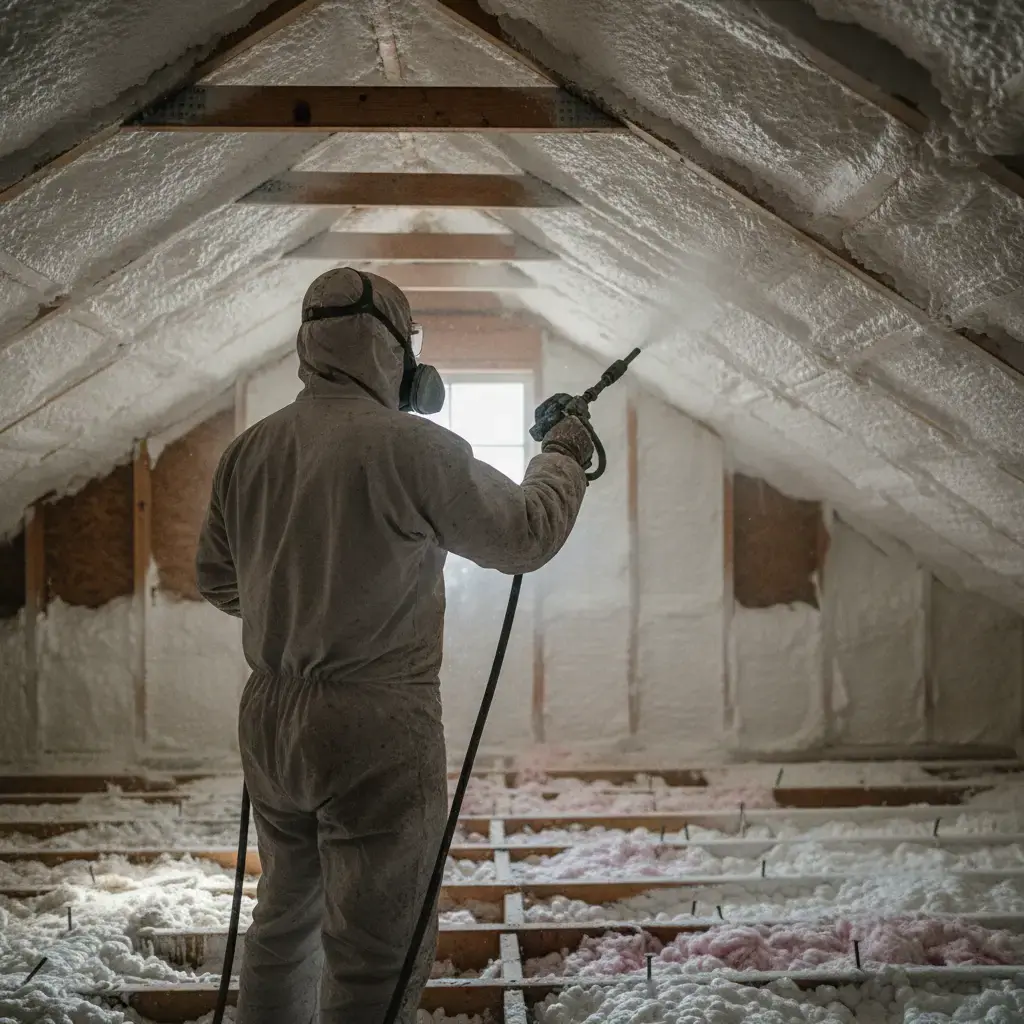
Open-cell or closed-cell spray foam insulation is applied directly to the underside of roof sheathing to create an unvented, conditioned attic. This approach is ideal for Calabasas homes with complex rooflines, HVAC equipment located in the attic (where conditioning the attic space reduces duct losses), or where wildfire smoke infiltration through vented soffits is a concern. Closed-cell foam achieves R-6 to R-7 per inch and also serves as a vapor and air barrier.
Learn moreFiberglass Batt Insulation
Pre-cut fiberglass batts are used in accessible ceiling joist cavities, particularly in room additions, garage ceilings, and vaulted ceiling sections in Calabasas homes. R-30 to R-38 batts are standard for ceiling applications in Climate Zone 9. Batts must be installed without compression or gaps to achieve rated R-values.
Insulation Removal and Replacement
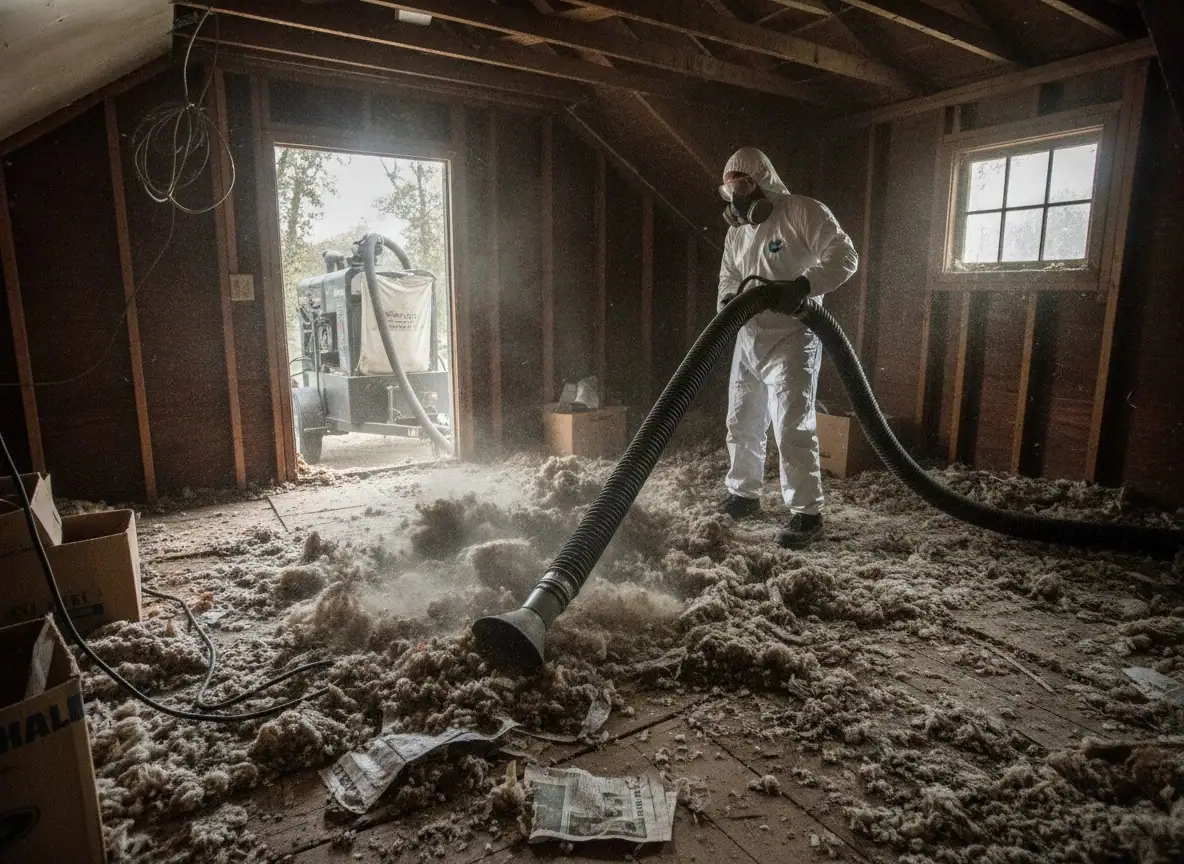
For Calabasas homes with contaminated, pest-damaged, or fire-smoke-affected insulation, complete insulation removal followed by fresh installation is the appropriate approach. This two-stage process ensures that no compromised material remains and that the new installation achieves full rated performance.
Crawl Space and Combined Envelope Solutions
For Calabasas homes on raised foundations, ceiling insulation upgrades are often paired with crawl space insulation and crawl space encapsulation to address the complete building envelope. A whole-home approach typically yields 25–35% greater energy savings than ceiling-only upgrades.
Ceiling Insulation Cost in Calabasas, CA
The cost of ceiling insulation in Calabasas varies based on the home’s square footage, the method selected, whether removal of existing insulation is required, and access conditions. Below are typical price ranges for Calabasas-area projects based on current material and labor costs.
Calabasas Neighborhoods We Serve
The Oaks at Calabasas
This gated master-planned community features large custom and semi-custom homes built primarily from the late 1990s through the mid-2000s. Many properties have complex rooflines with multiple attic sections, which require careful depth verification to ensure uniform R-value coverage. Homes here frequently have HVAC equipment in the attic, making spray foam unvented attic conversions a popular and highly effective upgrade.
Calabasas Park Estates and Calabasas Park
Developed predominantly in the 1970s and early 1980s, these neighborhoods contain the largest concentration of original-construction insulation in Calabasas. Many homes still have fiberglass batts installed at the time of construction that have settled to R-11 or lower. Blown-in insulation topping is the most cost-effective upgrade path here, and insulation replacement projects are common following pest inspections.
Hidden Hills (Adjacent Community)
Directly bordering Calabasas, Hidden Hills is an equestrian community with large single-story ranch-style homes on expansive lots. Single-story construction means 100% of the living area is directly below the attic, making ceiling insulation performance especially impactful. Properties here frequently benefit from R-49 to R-60 installations due to the single-story envelope exposure.
Old Calabasas and Mulholland Corridor
The older residential areas near Old Calabasas Road and the Mulholland Highway corridor include a mix of custom hillside homes and smaller residential properties from multiple eras. Irregular roof configurations, low-slope sections, and hillside positioning make these some of the most technically complex ceiling insulation projects in the area.
Ceiling Insulation Maintenance Tips for Calabasas Homeowners
- Inspect attic insulation depth annually. Check depth markers or use a ruler to verify that blown-in insulation has not settled below target depth, particularly after the first few years following installation.
- Check attic vents before each fire season. Ensure soffit and ridge vents are clear of debris — blocked vents cause attic heat to build toward 160°F, accelerating insulation degradation and increasing ceiling heat transfer.
- Seal attic access hatches. Attic access panels are a major source of air leakage in Calabasas homes. Weatherstripping and an insulated hatch cover prevent conditioned air from escaping and superheated attic air from entering.
- Monitor for rodent activity. Ground squirrels, rats, and other wildlife common in the Calabasas foothills and Monte Nido adjacent areas can nest in and destroy ceiling insulation. Annual pest inspections help catch infestations before they require full insulation removal.
- Inspect insulation after any roof work. Re-roofing, solar panel installation, or HVAC replacement can disturb or compress attic insulation. Have a professional verify coverage depth after any significant roof-level work.
- Address roof leaks immediately. Water-saturated insulation loses R-value and can harbor mold. In Calabasas, heavy winter rain events following dry summers can expose existing roof vulnerabilities. Any leak should prompt an immediate insulation inspection.
- Consider air quality monitoring after nearby wildfire events. If smoke infiltration is suspected following Santa Monica Mountains fire events, have attic insulation assessed for smoke contamination before assuming indoor air quality is normal.
Why Choose Best Price Insulation for Ceiling Insulation in Calabasas
Best Price Insulation has built its reputation serving the western San Fernando Valley and the Conejo Valley — the specific geographic corridor that includes Calabasas, Hidden Hills, Agoura Hills, Westlake Village, and the surrounding communities. We are not a regional franchise dispatching unfamiliar technicians; we are a team with direct, hands-on experience working in Calabasas homes across every neighborhood in the city.
We understand Climate Zone 9 insulation requirements under California Title 24, and we install every project to meet or exceed current code minimums. We provide complete documentation for permit compliance, which is increasingly required for Calabasas homeowners undertaking renovations in the post-Woolsey Fire regulatory environment.
Read moreShow less
Our service area covers the complete network of communities surrounding Calabasas, including Agoura Hills, Westlake Village, Thousand Oaks, Malibu, and Woodland Hills, meaning we have deep familiarity with the building types, construction eras, and climate challenges of the entire region.
Call Best Price Insulation at (818) 696-4154 to schedule your free Calabasas ceiling insulation assessment.
FAQ
Frequently Asked Questions: Ceiling Insulation in Calabasas, CA
How much does ceiling insulation cost in Calabasas?
For a typical Calabasas single-family home, blown-in ceiling insulation to R-38 ranges from $1,200 to $2,800 for attic floor areas of 1,500 to 2,500 square feet. Larger estates in communities like The Oaks at Calabasas may see project costs of $3,500 to $6,000. Spray foam for unvented attic applications typically ranges from $3,500 to $8,000 depending on square footage and attic complexity. We provide free on-site estimates for all Calabasas projects — call (818) 696-4154.
What R-value does ceiling insulation need to meet in Calabasas?
Calabasas falls within California Climate Zone 9. California’s current Title 24 standards require a minimum of R-38 for ceiling/attic insulation in Climate Zone 9 for existing homes undergoing permitted alterations. For new construction and major renovations, R-49 or higher is increasingly required. Best Price Insulation installs to R-38 minimum and recommends R-49 to R-60 for maximum comfort and energy savings in Calabasas’s hot-summer climate.
How long does ceiling insulation installation take in Calabasas?
For most Calabasas single-family homes, a blown-in attic insulation project takes one full day including preparation, air sealing, and installation. Projects requiring full removal of existing contaminated insulation typically take one to two days depending on attic size and access conditions. Spray foam applications for unvented attics typically require one to two days plus a cure time before the attic is re-entered.
Should I be concerned about wildfire smoke contamination in my attic insulation?
Yes, especially if your home is near Calabasas zip codes 91302 or 91372 and you remained in the area or evacuated during the November 2018 Woolsey Fire or subsequent fire events in the Santa Monica Mountains. Smoke particulate and volatile organic compounds can be absorbed into fiberglass and cellulose insulation and slowly off-gas into living areas over months or years. If you noticed persistent smoke odor after a nearby fire event, a professional attic insulation inspection is strongly recommended.
Can I add insulation on top of existing insulation in my Calabasas home?
In many cases, yes. If existing insulation is in good condition — free of moisture damage, rodent contamination, and smoke infiltration — blown-in insulation can be added on top to bring total coverage up to current R-value standards. However, if existing insulation is degraded, pest-infested, or contaminated, full removal before new installation is the appropriate approach. Our technicians assess existing conditions during the free on-site estimate.
Does ceiling insulation help with cooling costs in Calabasas summers?
Absolutely. Attic air temperatures in Calabasas during July and August peak at 150°F to 160°F above inadequately insulated ceilings. Upgrading from R-11 (common in 1970s Calabasas tract homes) to R-49 can reduce ceiling heat gain by 75% or more. Homeowners in Calabasas Park and Calabasas Park Estates neighborhoods regularly report 20–35% reductions in summertime cooling costs following ceiling insulation upgrades.
What areas near Calabasas do you serve?
We serve the complete surrounding region, including Agoura Hills, Westlake Village, Pacific Palisades, West Hills, Granada Hills, North Ranch, Monte Nido, Topanga, Santa Monica, Beverly Hills, Woodland Hills, Simi Valley, Culver City, Hidden Hills, Malibu, San Fernando, West Hollywood, Moorpark, and Thousand Oaks. If you’re located near Calabasas, we can help.
Is ceiling insulation a DIY project for Calabasas homeowners?
Basic blown-in topping is technically possible as a DIY project, but we strongly recommend professional installation in Calabasas for several reasons: California Title 24 compliance requires accurate depth and coverage verification; many Calabasas attics have complex configurations, HVAC equipment, and recessed lighting that require professional air sealing; and post-fire smoke contamination assessments require trained inspection. Professional installation ensures code compliance, manufacturer warranty validity, and optimal performance.
Get a Free Ceiling Insulation Estimate in Calabasas Today
If your Calabasas home is uncomfortable in the summer heat, your cooling bills are climbing, or your attic insulation hasn’t been evaluated in the last decade, now is the time to act. Best Price Insulation provides free, no-obligation on-site assessments for ceiling insulation in Calabasas and all surrounding communities.
Our team will measure your current insulation levels, identify air leakage points, assess for contamination or damage, and provide you with a clear, itemized estimate — with no pressure and no hidden fees.
Call us at (818) 696-4154 to schedule your free assessment. We serve Calabasas and the surrounding areas including Hidden Hills, Agoura Hills, Westlake Village, Malibu, and Woodland Hills. Protect your home, reduce your energy bills, and stay comfortable through every Calabasas summer — starting with the right ceiling insulation.
Get in touch
Find insulation help near you
Request a free estimate online or give us a call — our team will follow up quickly.
- Call us(818) 696-4154
- Visit26635 W Agoura Rd, Calabasas, CA 91302
- HoursMon-Sun 07:00-19:00