
Crawl Space Insulation in Calabasas, CA
Energy-Saving Crawl Space Insulation in Calabasas, CA for Calabasas, CA Homes — Licensed & Insured
Need crawl space insulation in Calabasas, CA? Best Price Insulation offers expert installation, encapsulation & removal. Call (818) 696-4154 for a free estimate.
Crawl space insulation is the process of thermally sealing and protecting the underfloor cavity beneath your home, preventing heat loss, moisture intrusion, and pest infiltration. In Calabasas, CA — a city nestled between the Santa Monica Mountains and the western San Fernando Valley — crawl spaces face unique stressors including seasonal humidity swings, fire-season heat spikes, and clay-heavy soils that shift and retain groundwater after winter rains.
At Best Price Insulation, we specialize in diagnosing and resolving crawl space performance issues specific to Calabasas homes. Whether you own a single-story ranch in Old Calabasas, a hillside estate near The Oaks, or a newer build in the Calabasas Park neighborhood, our team understands the local construction styles, microclimates, and building codes that govern proper insulation work. We provide comprehensive crawl space insulation services — from initial assessment to final air sealing — designed to lower your energy bills, improve indoor air quality, and protect your home’s structural integrity for the long term.
Call us today at (818) 696-4154 to schedule your free crawl space evaluation.
Understanding Crawl Space Insulation
A crawl space is a shallow, unfinished area beneath a home’s first floor — typically ranging from 18 inches to 4 feet in height — that houses plumbing, HVAC ducts, electrical wiring, and structural support beams. Unlike a full basement, a crawl space is not intended for occupancy, but it plays a critical role in your home’s overall thermal envelope and moisture management system.
Crawl space insulation involves installing insulating materials either between the floor joists above (a vented crawl space approach) or along the perimeter foundation walls (an encapsulated, conditioned crawl space approach). The goal in either case is to create a thermal and vapor barrier that prevents the unconditioned air below the home from interfering with indoor comfort and structural materials.
Read moreShow less
Historically, the standard practice in Southern California — including Calabasas — was to install fiberglass batt insulation between floor joists and leave the crawl space vented to the outside. This method, codified in older versions of the California Building Code, made sense in theory: outdoor air would ventilate moisture away. However, research over the past two decades has demonstrated that vented crawl spaces in California’s variable climate often introduce more moisture than they expel, leading to mold growth, wood rot, and insulation degradation.
The California Energy Commission’s Title 24 standards have increasingly favored conditioned or semi-conditioned crawl spaces, particularly in climate zones like CEC Climate Zone 9, which covers Calabasas. This zone is characterized by hot, dry summers with temperatures regularly exceeding 100°F in the valley floor areas, and cool, damp winters when Pacific storm systems push inland from the coast.
Calabasas was largely developed between the 1960s and 1990s, with many homes built on raised foundations specifically suited to the area’s rolling topography and expansive clay soils. This building stock — now 30 to 60 years old — represents the core of the crawl space insulation opportunity in the city. Older fiberglass batts have often sagged, absorbed moisture, or been disturbed by decades of pest activity, making replacement a common and necessary service in the area.
Modern crawl space insulation combines thermal insulation with vapor barriers, air sealing, and in many cases full encapsulation — creating a clean, dry, energy-efficient environment beneath your home. Learn more about crawl space encapsulation services
Why Crawl Space Insulation Is Needed in Calabasas, CA
The Calabasas Microclimate and Temperature Swings
Calabasas sits at the intersection of coastal and inland climates, producing temperature swings that are more dramatic than either environment alone. Summer daytime highs near the valley floor — such as in Calabasas Park and the Mulwood area — routinely reach 100°F to 108°F, while overnight temperatures can drop into the low 60s°F. This 40+ degree diurnal range creates repeated cycles of thermal expansion and contraction in structural materials, which over time loosens batt insulation from its friction-fit position between joists. During the record-breaking heat events of September 2022, when the National Weather Service recorded 109°F in nearby Woodland Hills, Calabasas homes with uninsulated or degraded crawl spaces saw interior floor temperatures rise significantly, overloading HVAC systems.
Clay Soils, Groundwater, and Winter Rain Events
The soils beneath much of Calabasas are classified as Olivenhain-Nacimiento clay loams and Castaic silty clay loams — expansive soil types that absorb and retain water during the rainy season (November through March) and then shrink and crack as they dry in summer. During significant rain events — such as the atmospheric river storms of February 2023 that dropped over 6 inches of rain across the Conejo and Las Virgenes watersheds — groundwater infiltration into crawl spaces spiked dramatically across neighborhoods including Old Calabasas, Parkway Calabasas, and homes along Las Virgenes Road. Moisture readings in local crawl spaces after those storms routinely exceeded 19% wood moisture content, well above the 16% threshold at which mold begins to colonize structural lumber.
The Santa Ana Wind and Fire Season Pressure
Each fall, the Santa Ana wind events that sweep through the Calabasas area — sometimes gusting to 60 mph or more through the Malibu Canyon and Las Virgenes corridors — create negative pressure dynamics that pull unconditioned air through crawl space vents and into the living space above. This stack effect forces HVAC systems to work harder and introduces particulate matter and smoke during fire events. The Woolsey Fire of November 2018, which burned through portions of western Calabasas and destroyed hundreds of homes in the surrounding area, underscored how vulnerable under-protected crawl spaces are to ember intrusion and radiant heat transfer.
Aging Housing Stock and Original Insulation Failure
Homes built in Calabasas during the primary development waves of the 1970s and 1980s typically received R-11 or R-13 fiberglass batt insulation in their crawl spaces — values that fall well short of the current Title 24 requirement of R-19 to R-38 depending on floor assembly type. After 40 years, the original fiberglass batts in these homes have typically compressed by 20 to 40 percent, are held in place only by deteriorated wire hangers, and have absorbed years of moisture cycling. Learn about our insulation removal and replacement services
Free, no-obligation estimates
Talk to Best Price Insulation
Tell us what you need and we’ll take it from there.
Signs You Need Crawl Space Insulation in Calabasas
Energy and Comfort Symptoms
- Floors that feel noticeably cold in winter or warm in summer, especially in rooms directly above the crawl space
- Monthly SoCalGas or SCE energy bills that have increased 15% or more year-over-year without corresponding rate changes
- HVAC system running continuously during mild weather (65°F–75°F days) with difficulty maintaining set temperature
- Uneven room temperatures between the first and second floor of more than 5°F
Moisture and Air Quality Symptoms
- Musty or earthy odors rising from floors or HVAC vents, particularly after winter rain events
- Condensation forming on windows or interior cold surfaces during cool mornings
- Allergy or respiratory symptoms that worsen indoors, suggesting elevated mold spore counts
- Visible mold or efflorescence (white mineral deposits) on basement walls or foundation stem walls
Structural Warning Signs
- Sagging, soft, or springy floor areas, especially in kitchens, bathrooms, or hallways above the crawl space
- Visible pest droppings, rodent nesting material, or damaged insulation batts during a crawl space visual inspection
- Wood moisture readings above 16% on subfloor or joist materials
Urgency note: Moisture readings above 19% or visible mold require immediate professional attention to prevent irreversible structural damage.
Our process
Our Crawl Space Insulation Process in Calabasas
- 01
Free On-Site Assessment (1–2 Hours)
Our technician performs a complete crawl space inspection, measuring the space dimensions, current insulation R-value, moisture levels, ventilation configuration, and the condition of vapor barriers, ducts, and structural members. We document findings with pho
- 02
Existing Insulation Removal (Half Day to 1 Day)
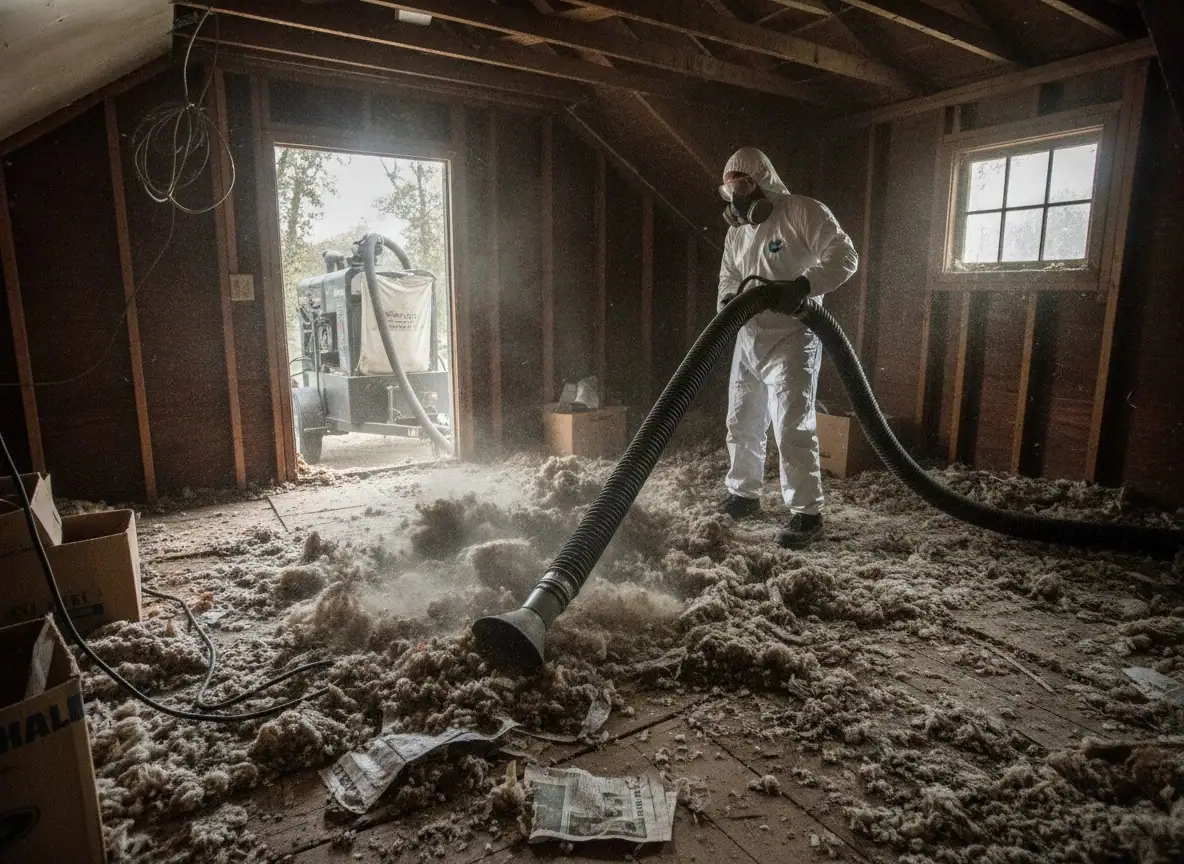
Degraded, moldy, or pest-contaminated insulation is removed using commercial vacuum equipment and safely bagged for disposal per Los Angeles County waste guidelines. This step is critical in Calabasas homes built before 1985, where original materials may have
- 03
Mold Remediation and Wood Treatment (As Needed, 1 Day)
If moisture readings indicate elevated fungal risk — common in Calabasas crawl spaces after winter atmospheric river events — we apply EPA-registered antimicrobial treatments to joists and subfloor sheathing before installing new insulation.
- 04
Air Sealing (2–4 Hours)
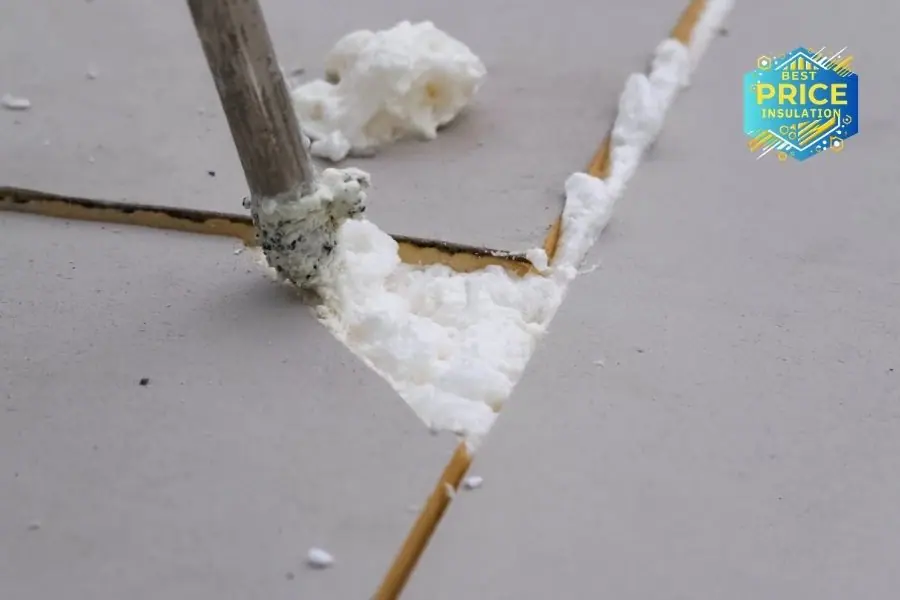
All penetrations, gaps around pipes, and foundation wall cracks are sealed with two-component spray foam or elastomeric caulk. In Calabasas, this step is particularly important during fire season, when ember-carrying Santa Ana winds can force combustion gases
- 05
Vapor Barrier Installation (Half Day)
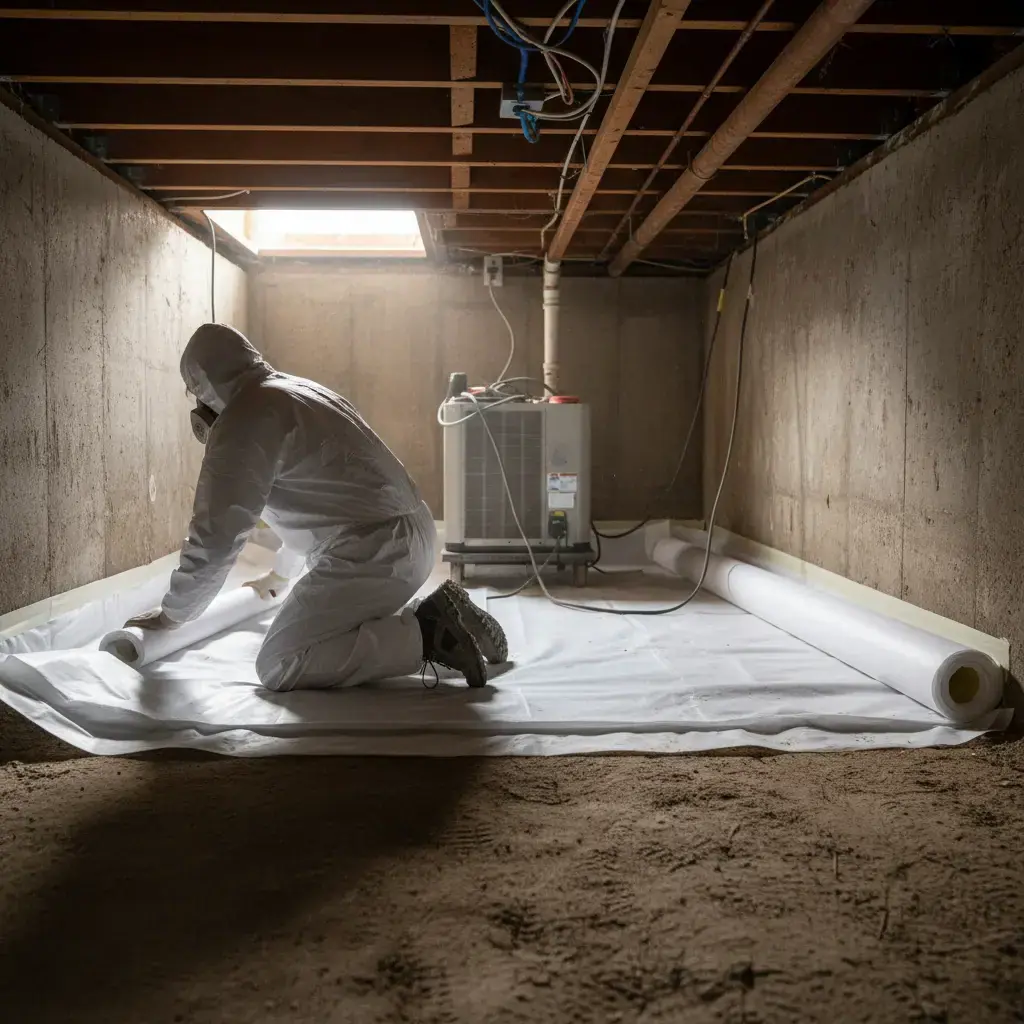
We install a minimum 10-mil polyethylene vapor barrier across the crawl space floor, extending up the foundation walls and sealed at all seams. For encapsulation projects, we use a 20-mil reinforced liner system rated for Calabasas’s clay-soil moisture pressur
- 06
Insulation Installation (Half Day to 1 Day)
Depending on the chosen method, we install new insulation to meet or exceed current Title 24 requirements — minimum R-19 for floor assemblies, with R-30 recommended for Calabasas’s Climate Zone 9 conditions. Explore spray foam insulation options
- 07
Final Inspection and Documentation (1–2 Hours)
We perform a post-installation walkthrough, take final moisture readings, photograph completed work, and provide homeowners with documentation suitable for Title 24 compliance records or resale disclosure purposes.
Crawl Space Insulation Methods and Approaches
Fiberglass Batt Insulation
Traditional fiberglass batts installed between floor joists remain a cost-effective option for well-ventilated crawl spaces with stable moisture conditions. In Calabasas, this method works best in newer homes (post-2000) with properly functioning mechanical ventilation and no history of groundwater intrusion. Target R-value: R-19 to R-25. Compare with blown-in insulation options
Spray Foam Insulation
Closed-cell spray polyurethane foam (SPF) applied to the underside of the subfloor or to foundation walls provides both insulation and a Class II vapor retarder in a single application. In Calabasas crawl spaces with irregular joist spacing, moisture history, or fire-season air infiltration concerns, closed-cell SPF at 2 inches (R-12) to 3 inches (R-19) offers superior performance. Learn more about spray foam insulation
Blown-In Insulation
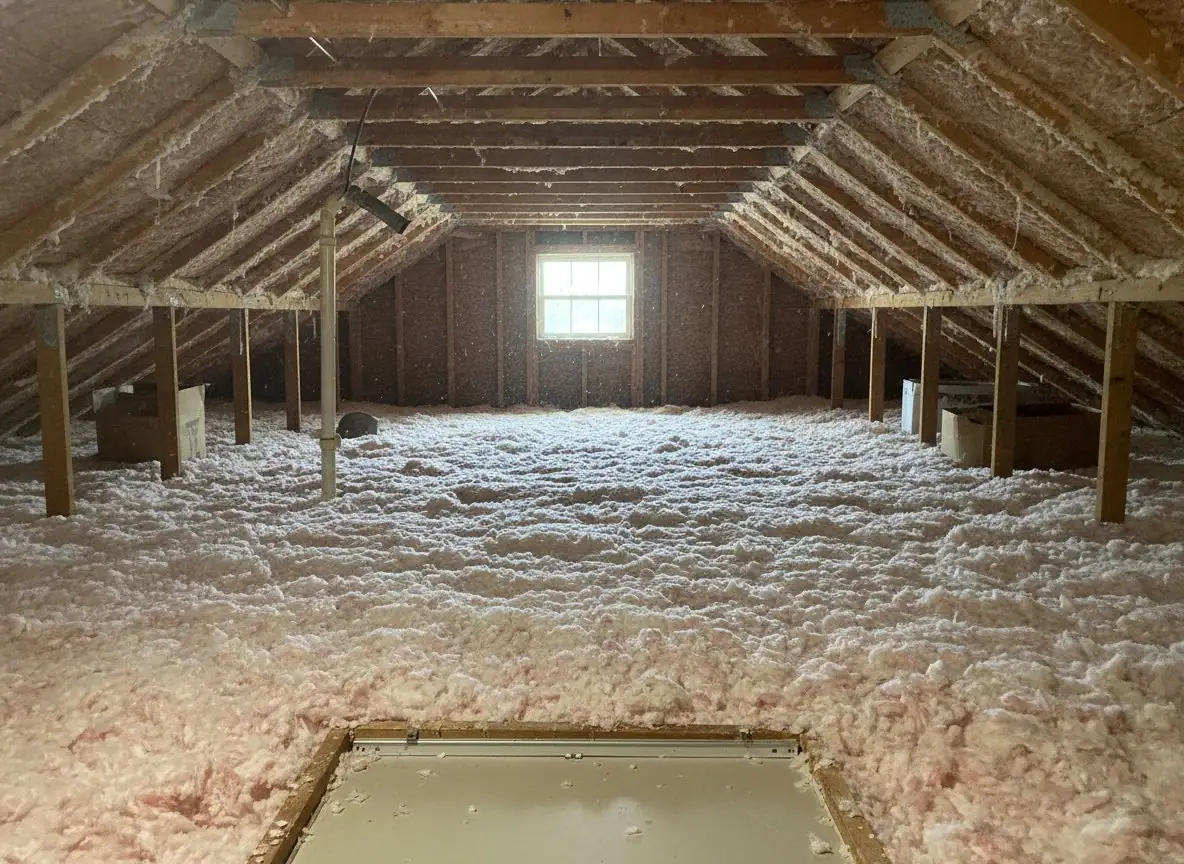
Loose-fill cellulose or fiberglass blown into enclosed floor cavities is effective in retrofit applications where joist bays are partially blocked by existing structures. This method is commonly used in Calabasas’s older ranch-style homes with narrow or irregular joist spacing.
Full Crawl Space Encapsulation
For crawl spaces with chronic moisture problems — particularly homes near Malibu Creek State Park, Calabasas Lake, or along Las Virgenes Road with high seasonal groundwater — full encapsulation combines vapor barriers, perimeter drainage, spray foam on walls, and a dehumidifier into a conditioned system. Explore our full encapsulation service
Crawl Space Insulation Cost in Calabasas, CA
Understanding the cost of crawl space insulation in Calabasas helps homeowners budget accurately and evaluate proposals. Pricing varies based on crawl space square footage, insulation method, access difficulty, and the condition of existing materials.
Typical Cost Ranges
- Fiberglass batt insulation (new installation): $1.50–$3.00 per square foot, or $1,500–$4,500 for a typical 1,000–1,500 sq ft Calabasas crawl space
- Spray foam insulation (closed-cell, foundation walls): $3.00–$6.00 per square foot, or $3,000–$9,000 for a mid-size home
- Blown-in insulation: $2.00–$4.00 per square foot, or $2,000–$6,000 for comparable spaces
- Full crawl space encapsulation: $5,000–$15,000 depending on square footage, drainage needs, and dehumidifier inclusion
- Insulation removal (prior to replacement): $1.00–$2.50 per square foot, typically $1,000–$3,500 for full removal
Read moreShow less
Calabasas-Specific Cost Factors
Several local factors influence pricing in Calabasas. Homes on hillside lots — common in The Oaks, Mountain View Estates, and Las Virgenes Canyon areas — often have crawl spaces with variable heights and limited access points, adding 10–25% to labor costs. Post-atmospheric river moisture remediation adds $500–$2,500 depending on affected wood area. Los Angeles County permit fees for insulation work currently range from $150–$400.
California utility rebates through SoCalGas and SCE may offset $200–$800 of project costs for qualifying insulation upgrades meeting Title 24 thresholds. Ask about current rebate availability when you call us at (818) 696-4154.
Crawl Space Insulation in Calabasas Neighborhoods
Old Calabasas
The historic core of Calabasas along El Canon Avenue and Mulholland Highway features homes dating from the 1950s and 1960s — among the oldest residential stock in the area. These properties commonly have original pier-and-beam foundations with open crawl spaces, deteriorated kraft-faced batts, and no vapor barriers. Full encapsulation or spray foam replacement is typically the recommended solution for this neighborhood.
Calabasas Park / The Oaks
Built primarily between 1975 and 1995, homes in Calabasas Park and the gated community of The Oaks at Calabasas sit on graded hillside lots with significant clay soil exposure. Seasonal clay expansion and groundwater pressure are the dominant crawl space challenges here, often requiring perimeter drainage installation alongside insulation upgrades.
Mulwood and Parkway Calabasas
These established neighborhoods feature tract homes built in the late 1970s and early 1980s. Most retain their original R-11 fiberglass batts, which have reached end of useful life. Close proximity to Malibu Creek increases ambient humidity, accelerating moisture-related insulation failure. R-25 or better replacement is standard for this area.
Hidden Hills Adjacent / Las Virgenes Corridor
Custom and semi-custom homes along the Las Virgenes Road corridor and near the Hidden Hills border often have larger, more complex crawl spaces with multiple access points. Variable joist heights and integrated HVAC duct runs require a combination of spray foam and batt approaches for complete thermal coverage.
Crawl Space Insulation Maintenance Tips for Calabasas Homeowners
- Annual visual inspection: Each fall before the rainy season, visually inspect your crawl space access hatch area for signs of moisture, pest entry, or insulation displacement. Calabasas’s rainy season typically begins in November.
- Post-storm moisture check: After significant rain events — particularly atmospheric river systems that drop 2 or more inches in 24 hours — check crawl space moisture levels with an inexpensive pin-type moisture meter. Target readings below 14% on wood surfaces.
- Maintain crawl space vents: Ensure all foundation vents open and close properly. Close vents during heavy rain events and extreme Santa Ana wind episodes to prevent moisture and debris intrusion.
- Inspect vapor barrier integrity: Check that vapor barriers remain flat, sealed at seams, and free from punctures from pest activity or HVAC service visits.
- Monitor HVAC ducts: Inspect visible duct connections in the crawl space annually. Disconnected ducts waste energy and introduce crawl space air directly into the living area.
- Pest control coordination: After any pest control treatment that requires crawl space entry, have insulation inspected for displacement or damage from technician activity.
- Gutter and grading maintenance: Ensure roof gutters are clear and soil grades away from the foundation — particularly important on Calabasas clay soils that retain and channel water toward foundations during winter storms.
Why Choose Best Price Insulation in Calabasas
Best Price Insulation is a locally focused insulation contractor serving Calabasas and the surrounding communities of the western San Fernando Valley, Conejo Valley, and Malibu Coast. Our team understands the specific demands that Calabasas’s clay soils, Santa Ana wind patterns, CEC Climate Zone 9 energy standards, and aging 1970s–1990s housing stock place on crawl space systems.
We offer transparent, itemized pricing with no hidden fees — a commitment that matters in a market where crawl space work is frequently oversold or underspecified. Every project begins with a thorough free assessment so you understand exactly what your home needs before any work begins.
Our service area encompasses the full range of communities surrounding Calabasas, including Agoura Hills, Westlake Village, Hidden Hills, Woodland Hills, West Hills, Malibu, Topanga, Monte Nido, and Thousand Oaks, meaning our technicians are deeply familiar with local construction variations and permit requirements across the region.
To discuss your crawl space needs or schedule your free inspection, call us at (818) 696-4154. Contact Best Price Insulation online
FAQ
Frequently Asked Questions About Crawl Space Insulation in Calabasas
How much does crawl space insulation cost in Calabasas, CA?
Costs in Calabasas typically range from $1,500 to $15,000 depending on the method, square footage, and condition of the existing crawl space. Standard fiberglass batt replacement for a 1,200 sq ft crawl space typically runs $1,800–$3,600. Full encapsulation with spray foam and vapor barrier on a similarly sized home ranges from $6,000–$12,000. Hillside lots common in The Oaks and Mountain View Estates may carry a 10–25% labor premium due to access difficulty.
How long does crawl space insulation installation take in Calabasas?
A straightforward insulation replacement in a typical Calabasas home takes 1 to 2 days: half a day for removal and half a day to a full day for installation. Full encapsulation projects with vapor barriers, drainage, and spray foam typically take 2 to 4 days. Homes requiring mold remediation prior to installation add 1 day to the schedule.
Do I need a permit for crawl space insulation in Calabasas?
In most cases, insulation replacement that does not alter structural elements does not require a permit from the City of Calabasas. However, crawl space encapsulation that modifies ventilation configurations — converting from vented to unvented — may require a building permit under California Residential Code Section R408. We handle all permit coordination as part of our encapsulation service.
What R-value is required for crawl space insulation in Calabasas?
Calabasas falls within CEC Climate Zone 9. Title 24 currently requires a minimum of R-19 for raised floor assemblies in this climate zone, though the California Energy Commission recommends R-30 for optimal whole-home energy performance. We always install to current code minimum at a baseline, with upgrade options available.
How does Calabasas’s rainy season affect crawl space insulation?
The wet season (November through March) is the most critical period for Calabasas crawl spaces. Atmospheric river events — which have become more intense and frequent, as evidenced by the February 2023 storms that dropped 6+ inches across the Las Virgenes watershed — push moisture through foundation vents and soil capillary action into crawl spaces. Homes with degraded or absent vapor barriers are particularly vulnerable. We recommend pre-season inspections each October.
Can crawl space insulation help with Calabasas’s wildfire smoke and air quality?
Yes. Properly air-sealed crawl spaces significantly reduce the infiltration of wildfire smoke and particulate matter (PM2.5) into living spaces. During events like the Woolsey Fire of November 2018, homes with well-sealed crawl spaces and HVAC systems demonstrated substantially lower interior particulate concentrations. Closed-cell spray foam on foundation walls provides an effective barrier against smoke infiltration that vented batt systems cannot match.
How do I know if my existing crawl space insulation needs replacement?
Key indicators include visible sagging or fallen batts, a musty odor from floor vents, floors that feel cold in winter, energy bills that have risen without explanation, or any history of pest activity beneath the home. Homes built before 1990 in Calabasas should receive a professional assessment regardless of visible symptoms, as R-11 and R-13 original batts have typically reached or exceeded their functional lifespan.
Does Best Price Insulation serve areas near Calabasas?
Yes. We serve Calabasas and surrounding communities including Agoura Hills, Westlake Village, Hidden Hills, Woodland Hills, West Hills, Malibu, Topanga, Monte Nido, Pacific Palisades, Santa Monica, Beverly Hills, Granada Hills, Simi Valley, Thousand Oaks, Moorpark, Culver City, San Fernando, and West Hollywood. View all service areas
Schedule Your Free Crawl Space Insulation Assessment in Calabasas Today
If your Calabasas home has a crawl space that is more than 10 years old, has experienced moisture intrusion after winter storms, or simply hasn’t been inspected recently, now is the time to act. Proper crawl space insulation protects your floors, your HVAC system, your indoor air quality, and your energy budget — all critical concerns in Calabasas’s demanding climate.
Best Price Insulation offers free, no-obligation crawl space assessments for homeowners throughout Calabasas and the surrounding region. Our inspections include moisture readings, R-value assessment, vapor barrier evaluation, and a written recommendation — at no cost to you.
Call us now at (818) 696-4154 to book your appointment. Our team is ready to help you protect your Calabasas home from the ground up.
Schedule online through our contact page
Get in touch
Find insulation help near you
Request a free estimate online or give us a call — our team will follow up quickly.
- Call us(818) 696-4154
- Visit26635 W Agoura Rd, Calabasas, CA 91302
- HoursMon-Sun 07:00-19:00