
Spray Foam Insulation in Calabasas, CA
Energy-Saving Spray Foam Insulation for Calabasas, CA Homes — Licensed & Insured
Best Price Insulation installs spray foam insulation in Calabasas, CA. Free estimates, 24/7 emergency service, financing available. Call (818) 696-4154.
Spray foam insulation is one of the most effective ways to seal and insulate a home in Calabasas, CA, where wide temperature swings between hot, dry summers and cool coastal-influenced winters put constant pressure on a building envelope. Best Price Insulation, an insulation contractor serving Calabasas and the surrounding communities, installs spray foam in attics, walls, crawl spaces, garages, and roof decks for both residential and commercial clients. This page explains exactly how spray foam works, where it goes, what it costs to consider, and how to choose the right installer.
[Project photo gallery — spray foam attic, crawl space, and wall installations in Calabasas]
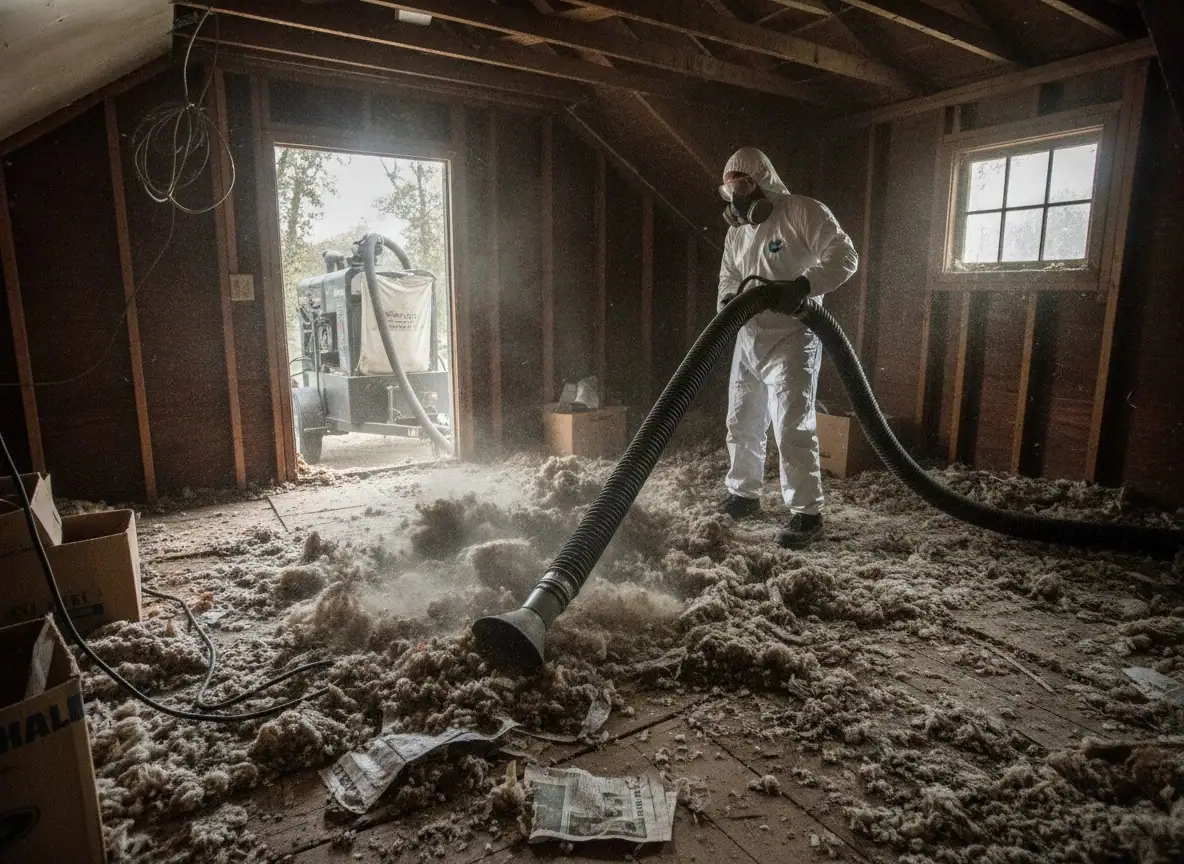
What is spray foam insulation?
Spray foam insulation is a two-component liquid that is mixed at the spray gun tip, applied as a rapidly expanding foam, and cures in place to form a continuous airtight thermal, moisture, and air barrier. The two components — typically an isocyanate and a polyol resin — react on contact and can expand anywhere from 30 to 100 times their original liquid volume depending on the formulation. That expansion forces foam into cracks, gaps, and irregular cavities that cut, batt, or blown insulation cannot reliably reach.
Because spray foam bonds directly to framing, sheathing, concrete, and masonry, it performs as both insulation and air barrier in a single application — a meaningful advantage in Calabasas homes, where the Santa Ana winds can drive outdoor air through even small envelope gaps and spike cooling loads overnight. Understanding the two main types of spray foam is the logical next step before choosing a system for your project.
Is polyurethane foam the same as closed-cell foam?
Polyurethane foam insulation and closed-cell spray foam are closely related but not identical terms. All spray-applied polyurethane foam — often called SPF insulation or urethane spray foam — is made from polyurethane chemistry, but it comes in two distinct cell structures: open-cell and closed-cell. Closed-cell polyurethane foam has cells that are fully enclosed, giving it higher density, a higher R-value per inch, and much greater resistance to moisture vapor. Open-cell polyurethane foam leaves the cell walls intentionally ruptured, producing a lighter, softer, more vapor-permeable material.
When a contractor or product sheet refers to "closed-cell foam," they mean a specific sub-type of polyurethane foam — not the entire product category. Brands such as BASF spray foam and Walltite are examples of closed-cell systems; KrakenBond and similar retrofit products span both categories. Knowing the difference between the two cell types is what allows you to match the right product to each location in your home.

Free, no-obligation estimates
Talk to Best Price Insulation
Tell us what you need and we’ll take it from there.
At a glance
Open-cell vs. closed-cell spray foam: which is right for your home?
Closed-cell spray foam is the better choice wherever moisture resistance and maximum R-value per inch are priorities; open-cell spray foam is preferred where vapor permeability and sound attenuation matter more, or where price is the deciding factor. To see how cost per board foot compares across insulation options, our insulation cost page breaks down the numbers for Calabasas.
| Property | Open-Cell Foam | Closed-Cell Foam |
|---|---|---|
| Density | ~0.5 lb per cu ft | ~2 lb per cu ft |
| R-value per inch | ~R-3.5 to R-4 | ~R-6 to R-7 |
| Moisture resistance | Low — vapor-permeable | High — acts as vapor retarder |
| Structural contribution | Minimal | Adds racking strength to walls |
| Sound attenuation | Better (softer, absorbs sound) | Moderate |
| Best uses | Interior walls, interior attic cavities, sound control | Crawl spaces, exterior walls, roof decks, garages, areas with moisture exposure |
Calabasas homes near Malibu Creek or Monte Nido often have crawl spaces that see ground moisture, making closed-cell the standard choice below grade. Interior partition walls where sound control is the goal are strong candidates for open-cell. Once you know which type fits each zone, the next question is where in the home those zones actually are.
Where can spray foam be installed in a Calabasas home?
Spray foam can be installed in virtually every structural cavity and thermal boundary in a Calabasas home.
- Attic (roof deck or attic floor): Applying closed-cell or open-cell foam directly to the underside of roof sheathing creates an unvented conditioned attic that keeps HVAC equipment and ducts inside the thermal envelope — a significant efficiency gain in Calabasas's summer heat.
- Exterior walls: Foam fills stud cavities fully, eliminating convective loops and thermal bridging through framing.
- Crawl space walls and rim joists: Closed-cell foam seals the perimeter and blocks ground moisture from entering the conditioned space.
- Garage walls and ceiling: Spray foam between living areas and an attached garage improves both thermal performance and fire compartmentalization.
- Roof deck (commercial and residential): Spray-applied polyurethane foam roofing systems create a seamless waterproof thermal layer directly over the deck.
- Basement and foundation walls: Where basements exist, closed-cell foam on foundation walls outperforms batt insulation in moisture-prone environments.
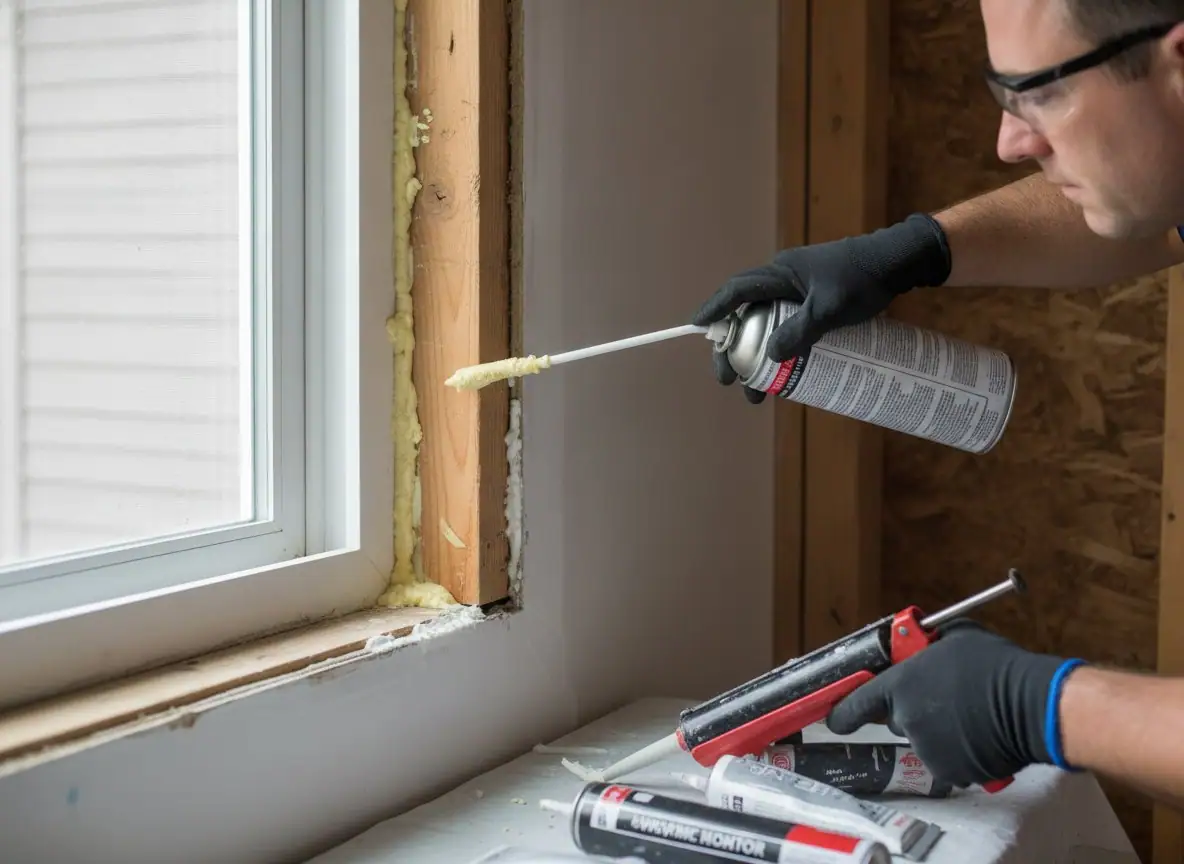
- Around mechanical penetrations and windows: Two-component foam or single-component PUR foam seals gaps around pipes, ducts, and rough openings that standard caulk cannot bridge.
Many of these locations involve existing finished walls, which raises the practical question of whether foam can be installed without a full gut renovation.
Can you spray foam inside existing walls?
Yes — spray foam can be injected into existing closed walls using a drill-and-fill technique, though it requires a different product and process than open-spray applications. Trained technicians drill a series of small holes (typically 1 to 2 inches in diameter) through the exterior siding or interior drywall at each stud bay, then inject a low-expansion two-component foam or a slow-rise RetroFoam-style material that fills the cavity without over-pressurizing the wall assembly.
The key decision rule: injection foam designed for retrofit applications expands slowly and stops when cavity pressure rises, which prevents blowouts. Standard high-expansion closed-cell foam should not be injected into an enclosed existing wall cavity for this reason. After injection, the drill holes are plugged and the surface is patched. This process works well in the older ranch-style and Spanish-revival homes common in Calabasas and North Ranch where re-siding or drywall removal is not planned. With location and technique covered, the next critical consideration for any enclosed application is fire safety.
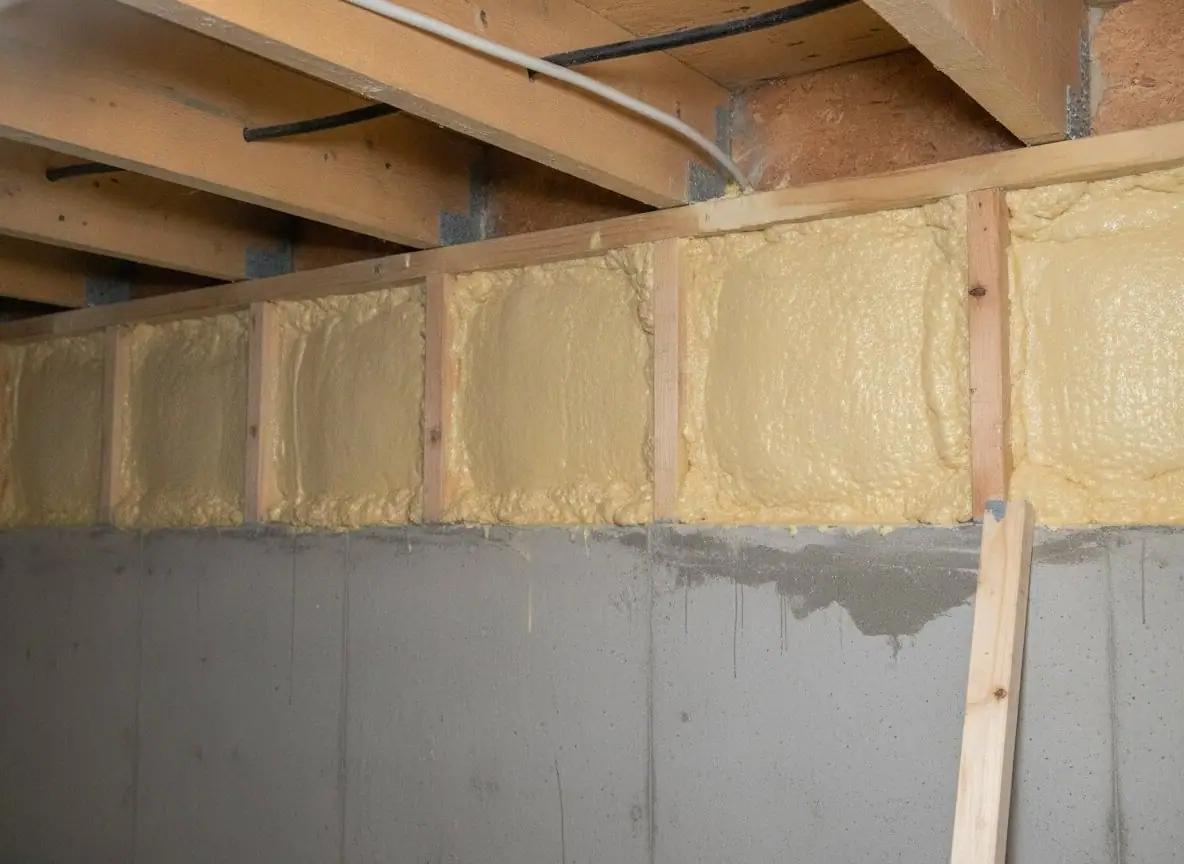
Is spray foam fire-rated and safe?
Spray foam insulation is combustible and must be protected by an approved thermal barrier or ignition barrier whenever it is left exposed in occupied or accessible spaces. A thermal barrier — most commonly 1/2-inch gypsum wallboard — is required between exposed foam and the interior of a building to slow the spread of flame and give occupants time to exit. In attics and crawl spaces where full thermal barrier coverage is not always practical, an approved ignition barrier material may be used instead, depending on the specific application and local building department requirements.
Many spray foam formulations include intumescent additives that cause the foam surface to char and swell when heated, slowing flame spread. Fire-rated foam systems have been tested to recognized standards; your local Calabasas or Los Angeles County building inspector will specify which protection is required for your project. We always recommend confirming the required barrier with your permit office before installation begins — requirements can vary by occupancy type and location within the structure. Beyond fire behavior, homeowners frequently ask about biological risks such as mold.
Can mold grow behind spray foam insulation?
Closed-cell spray foam does not support mold growth on its own surface because it contains no organic food source and resists moisture absorption. However, mold can still develop on adjacent organic building materials — wood framing, OSB sheathing, paper-faced drywall — if moisture is already present at the time of installation or enters through an undetected leak afterward. The foam seals the cavity so thoroughly that any trapped moisture has nowhere to escape, which makes pre-installation moisture assessment critical. Our insulation materials and types page compares how each option handles moisture.
Before we spray any cavity, we check for elevated wood moisture content. Any reading above approximately 19% in framing warrants drying the assembly before foam is applied. Open-cell foam, being vapor-permeable, allows drying to occur inward and is sometimes used in climates where seasonal drying cycles are beneficial — though Calabasas's dry Mediterranean climate means inward drying potential is limited most of the year. One practical question that surprises many homeowners involves a completely different structural use of foam.
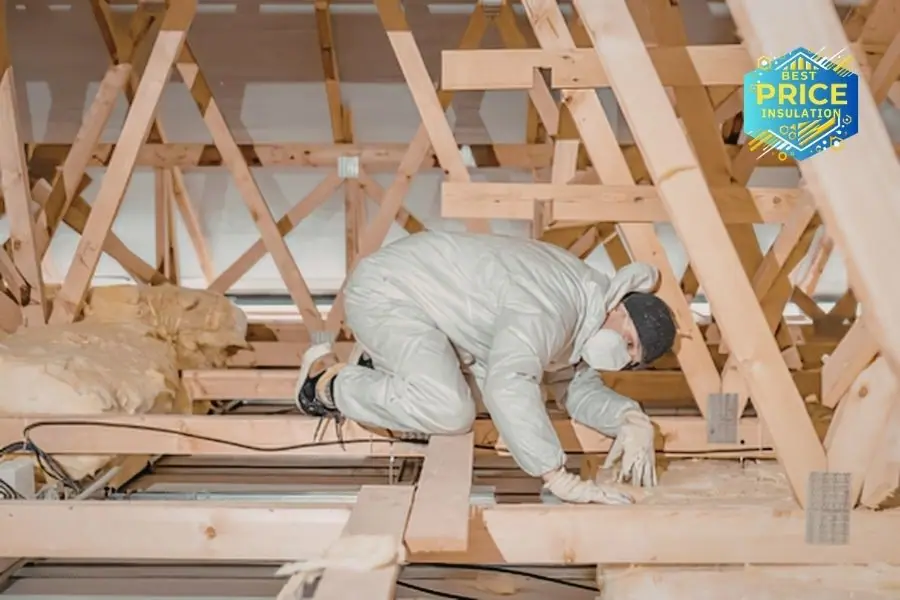
Will spray foam hold up concrete?
Closed-cell spray polyurethane foam can bear compressive loads and is used in some civil and industrial applications to lift and stabilize settled concrete slabs — a process sometimes called polyurethane concrete lifting or foam jacking. In a residential insulation context, closed-cell foam adds measurable racking strength to wall assemblies by bonding the sheathing and framing into a stiffer panel. It does not, however, replace structural elements or act as a foundation repair product in standard insulation applications. If a Calabasas homeowner has a settling concrete slab or structural concern, that is a separate scope of work handled by a structural contractor. The more universally relevant concern for most homeowners is understanding the genuine trade-offs of spray foam as an insulation material.
What are the downsides of foam insulation?
Spray foam has real limitations that every homeowner should weigh before choosing it.
- Higher upfront cost: Spray foam typically costs more per square foot installed than batt or blown-in insulation. The long-term energy savings usually offset this, but the initial investment is larger.
- Requires professional installation: Improper mixing ratios, temperature, or application thickness produce off-ratio foam that off-gasses, shrinks, or provides reduced R-value. This is not a DIY material for whole-house applications.
- Difficult to remove: Once cured, spray foam bonds aggressively to most substrates. Removal requires grinding or cutting, which makes future access to wiring, plumbing, or roof sheathing more involved.
- Off-gassing during cure: Freshly applied spray foam releases amine and isocyanate vapors during the cure window — typically 24 hours. Occupants and pets should not re-enter sprayed areas until full cure is confirmed.
- UV degradation: Exposed foam breaks down under ultraviolet light and must be coated or covered within a reasonable timeframe after installation.
- Potential for shrinkage: Off-ratio or improperly applied closed-cell foam can shrink away from framing members, creating air gaps that negate its air-sealing benefit.
- Vapor barrier implications: Closed-cell foam changes the drying potential of a wall assembly. In some configurations, this requires careful design review to avoid trapping moisture.
Understanding these limitations makes the installation process itself — and why each step matters — much easier to evaluate.
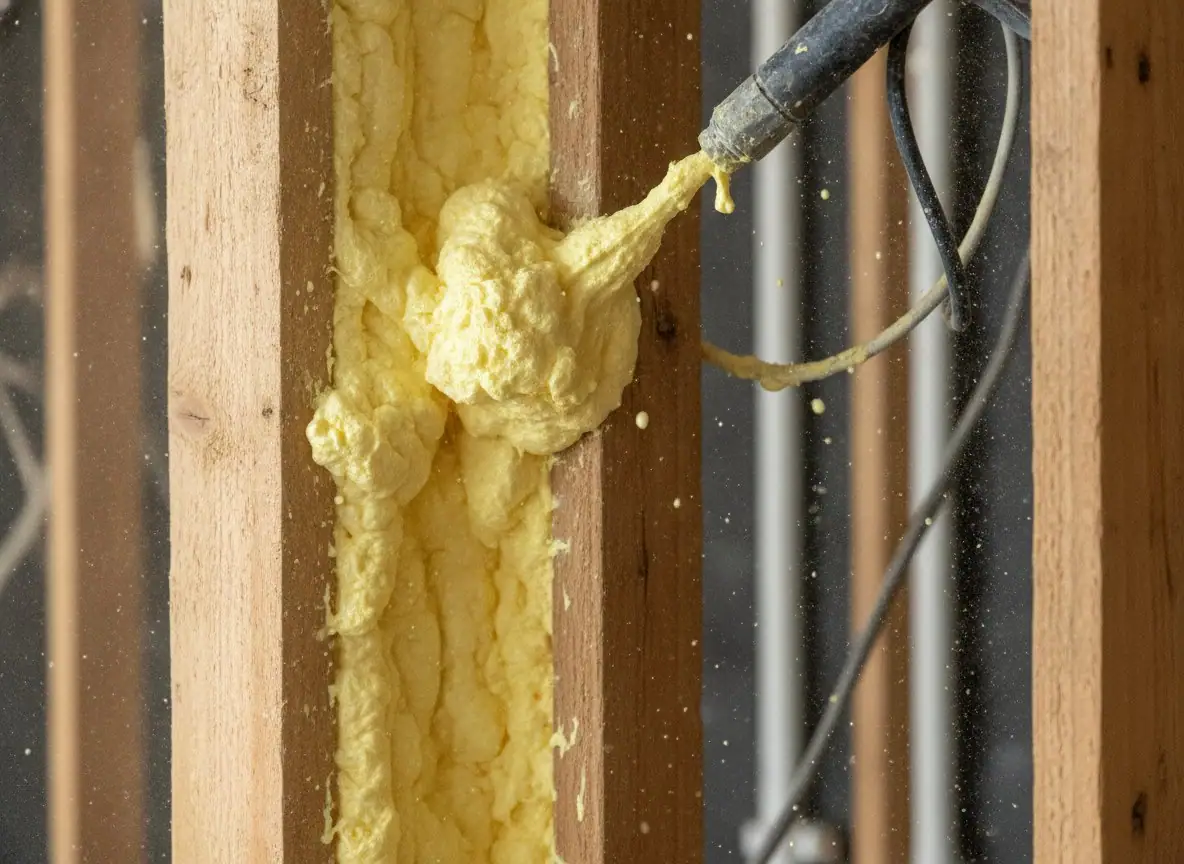
How is spray foam installed and how long does it take?
Spray foam installation follows a defined sequence that directly affects quality and safety.
- Pre-installation inspection: We assess the cavity, check framing moisture content, identify any existing insulation that needs removal, and confirm substrate temperature. Spray foam requires substrate and ambient temperatures generally above 50°F for proper adhesion and cure — rarely a problem in Calabasas but relevant on cool winter mornings.
- Surface preparation: Loose debris, existing deteriorated insulation, and standing moisture are removed. Penetrations that should not receive foam are masked.
- Equipment setup and ratio check: Proportioner equipment heats and pressurizes the two components to the manufacturer's specified ratio. A test shot onto cardboard confirms correct cream time, tack time, and color before work begins on the structure.
- Application in lifts: Closed-cell foam is applied in passes (lifts) of typically no more than 2 inches at a time to control exothermic heat buildup. Open-cell foam can be applied in thicker single passes. Applying closed-cell foam too thick in one pass can cause the interior to remain uncured — a critical quality control point that less experienced crews sometimes skip.
- Cure and inspection: Foam is visually and physically inspected for coverage, thickness, and adhesion. Any voids or thin spots are resprayed before the crew leaves.
- Trimming and cleanup: Excess foam is trimmed flush with framing. Overspray on surfaces not intended for foam is cleaned or masked material is removed.
- Thermal or ignition barrier installation: If the foam will be left accessible, the appropriate code-required barrier is installed before the space is returned to service.
Read moreShow less
A typical attic or crawl space in a 2,000 sq ft Calabasas home takes one to two days for spray application, plus any additional time for thermal barrier installation. With the process clear, the logical next question is what that scope of work costs, and the breakdown of spray foam insulation cost in Calabasas explains how pricing comes together.
At a glance
How much does it cost to spray foam insulate a 2000 sq ft house?
The total cost of spray foam insulation depends on several interacting variables — not a single square footage rate.
| Cost Factor | Why It Matters |
|---|---|
| Foam type (open-cell vs. closed-cell) | Closed-cell material costs more per board foot but achieves target R-value in less thickness |
| Target R-value and required thickness | Greater thickness means more material and more time |
| Application area and accessibility | Tight attic pitches, crawl spaces with low clearance, and cathedral ceilings increase labor time |
| Existing insulation removal | Old batt or blown-in insulation must be removed before spray foam can be applied to the same surface |
| Surface preparation and repairs | Rotted wood, pest damage, or prior moisture intrusion adds scope |
| Thermal or ignition barrier | Required in many applications; adds drywall or coating material and labor |
| Permits | Los Angeles County and the City of Calabasas may require permits for insulation in certain applications; permit fees vary |
We do not publish flat-rate pricing because an accurate number requires a physical inspection of your specific home. After a free on-site estimate, we provide a written, itemized quote. For a broader breakdown of what influences spray foam project costs, see our dedicated cost guide. Contact us at (818) 696-4154 to schedule your free inspection and get the exact number for your project.
How do you choose a spray foam insulation contractor in Calabasas?
The right spray foam contractor in Calabasas has trained technicians who understand both the product chemistry and the local building requirements of Los Angeles County, and can also advise on all insulation services in Calabasas when another material suits a particular area better.
Ask any contractor you are considering the following before hiring:
- Which foam system and brand do you use, and can you share the product data sheet?
- What substrate temperature and moisture conditions do you require before spraying?
- How do you apply closed-cell foam — in what lift thickness, and why?
- Will you pull a permit if one is required by the City of Calabasas or LA County?
- What thermal or ignition barrier is required for my application, and is that included in the quote?
- Are you insured and bonded for spray foam work?
Read moreShow less
A contractor who answers these questions specifically and confidently is demonstrating genuine process knowledge. Best Price Insulation serves Calabasas and the surrounding areas including Agoura Hills, Westlake Village, Woodland Hills, Hidden Hills, Malibu, Thousand Oaks, West Hills, Topanga, Monte Nido, Pacific Palisades, Simi Valley, Moorpark, Santa Monica, Beverly Hills, Granada Hills, North Ranch, San Fernando, West Hollywood, and Culver City. We provide free written estimates, offer financing options, and are available 24/7 for emergency insulation needs.
FAQ
FAQ
How long does spray foam insulation last?
Properly installed, fully cured spray foam does not degrade, sag, or settle the way loose-fill or batt insulation can. Its thermal and air-sealing performance is considered indefinite under normal building conditions, though exposed foam must be protected from UV light to prevent surface breakdown.
Is spray foam safe to live around after installation?
Yes — once spray foam has fully cured, typically within 24 hours of application, it is inert and safe for occupants and pets. During and immediately after spraying, the area must be vacated due to isocyanate and amine off-gassing. Trained technicians wear supplied-air respirators during application for this reason.
Can spray foam be used in a garage or crawl space?
Yes. Garages and crawl spaces are among the most practical locations for spray foam in a Calabasas home. On crawl space walls and rim joists, closed cell spray foam blocks ground moisture and significantly reduces conditioned-air loss. In an attached garage, foam on shared walls and the ceiling improves both energy performance and fire compartmentalization between the garage and living space.
Does spray foam help with noise?
Open-cell spray foam provides meaningful sound attenuation because its soft, porous structure absorbs airborne sound waves within a wall or ceiling cavity. Closed-cell foam contributes less to sound absorption due to its rigid, dense structure, though it still reduces flanking noise by air-sealing gaps that transmit sound. For dedicated sound control between rooms, open cell spray foam or a combination approach is typically more effective.
Do I have to leave my home during installation?
Yes. Occupants, children, and pets should leave the home during spray foam application and remain out for at least 24 hours, or until the foam has fully cured and the space has been ventilated. We will confirm the re-entry window based on the specific products used and the ventilation conditions of your Calabasas home.
Can spray foam be applied over existing insulation?
In most cases, existing insulation must be removed from the surface receiving spray foam so the foam can bond directly to the substrate and form a continuous air seal. Applying spray foam over old, compressed, or moisture-damaged insulation defeats both its adhesion and its air-barrier function. There are limited retrofit configurations — such as adding a thin closed-cell layer over existing batt in a wall cavity for vapor control — but these require case-by-case evaluation during the inspection.
Ready to find out exactly what spray foam insulation will do for your Calabasas home? Best Price Insulation, your local insulation contractor serving Calabasas and the greater Los Angeles area, offers free on-site inspections and written estimates with no obligation. We also assist homeowners with insurance claims and have financing available. Call us at (818) 696-4154 any time — our team is available 24/7 for emergency service.
Why choose us
Why choose Best Price Insulation?
Free estimates
Get a clear, no-obligation estimate before any work begins.
Licensed & insured
Your property and our crew are protected on every project.
Residential & commercial
One team for homes, multi-family and commercial properties.
Locally owned & operated
A local team serving your community and the surrounding area.
Get in touch
Find insulation help near you
Request a free estimate online or give us a call — our team will follow up quickly.
- Call us(818) 696-4154
- Visit26635 W Agoura Rd, Calabasas, CA 91302
- HoursMon-Sun 07:00-19:00