
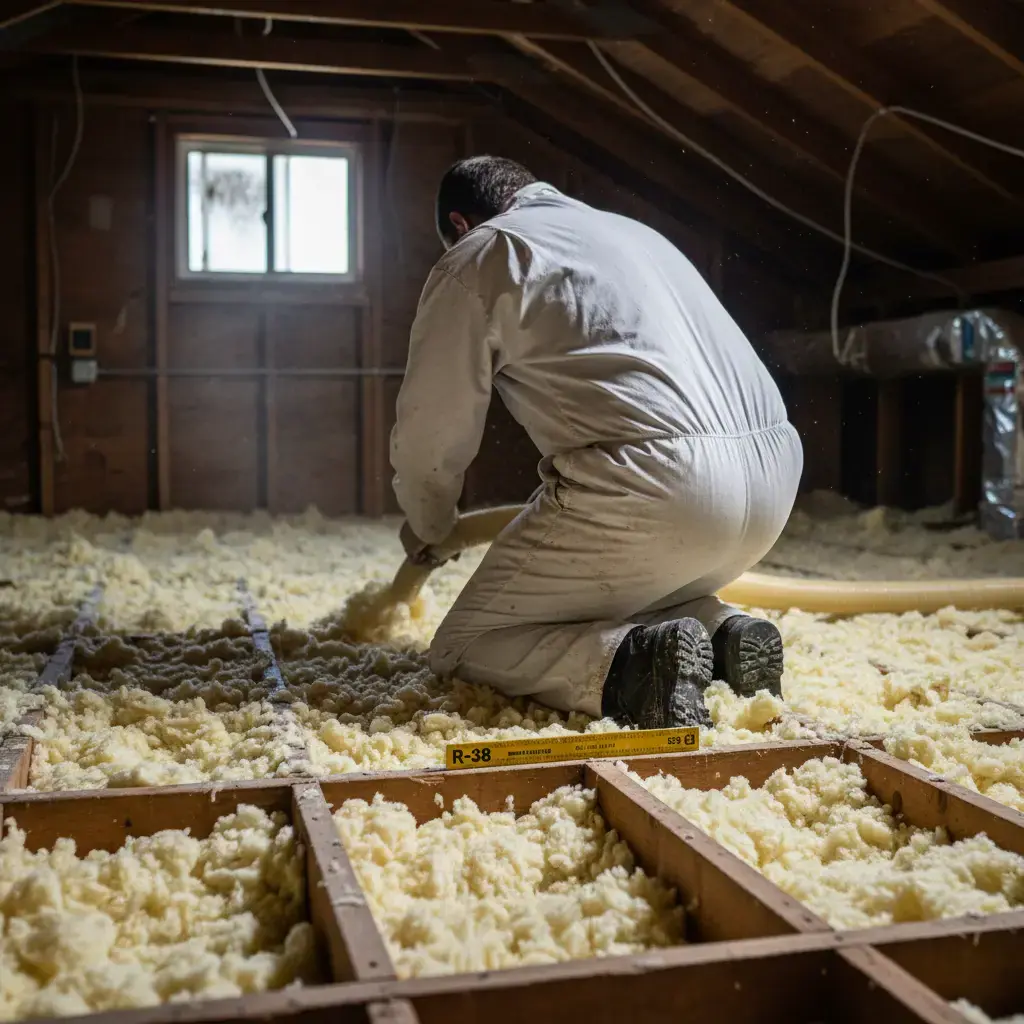
Attic Insulation in Calabasas, CA
Energy-Saving Attic Insulation in Calabasas, CA for Calabasas, CA Homes — Licensed & Insured
Get expert attic insulation in Calabasas, CA from Best Price Insulation. Free estimates, R-49+ upgrades, spray foam & blown-in. Call (818) 696-4154 today.
Attic insulation is the thermal and acoustic barrier installed between your living space and the roof — one of the single most impactful upgrades a Calabasas homeowner can make for year-round comfort and energy efficiency. In Calabasas, where summer temperatures regularly climb past 100°F in the inland valleys and dry Santa Ana winds drive rapid temperature swings, a properly insulated attic is not a luxury — it is a necessity.
Best Price Insulation specializes in attic insulation services designed specifically for the Southern California climate and the architectural styles common throughout Calabasas and the greater Las Virgenes area. Whether you own a sprawling ranch home in the Calabasas Highlands, a modern estate in Hidden Hills adjacent, or a townhome near Old Town Calabasas, our crew delivers precision installation, honest assessments, and competitive pricing. Call us today at (818) 696-4154 to schedule your free attic evaluation.
Understanding Attic Insulation
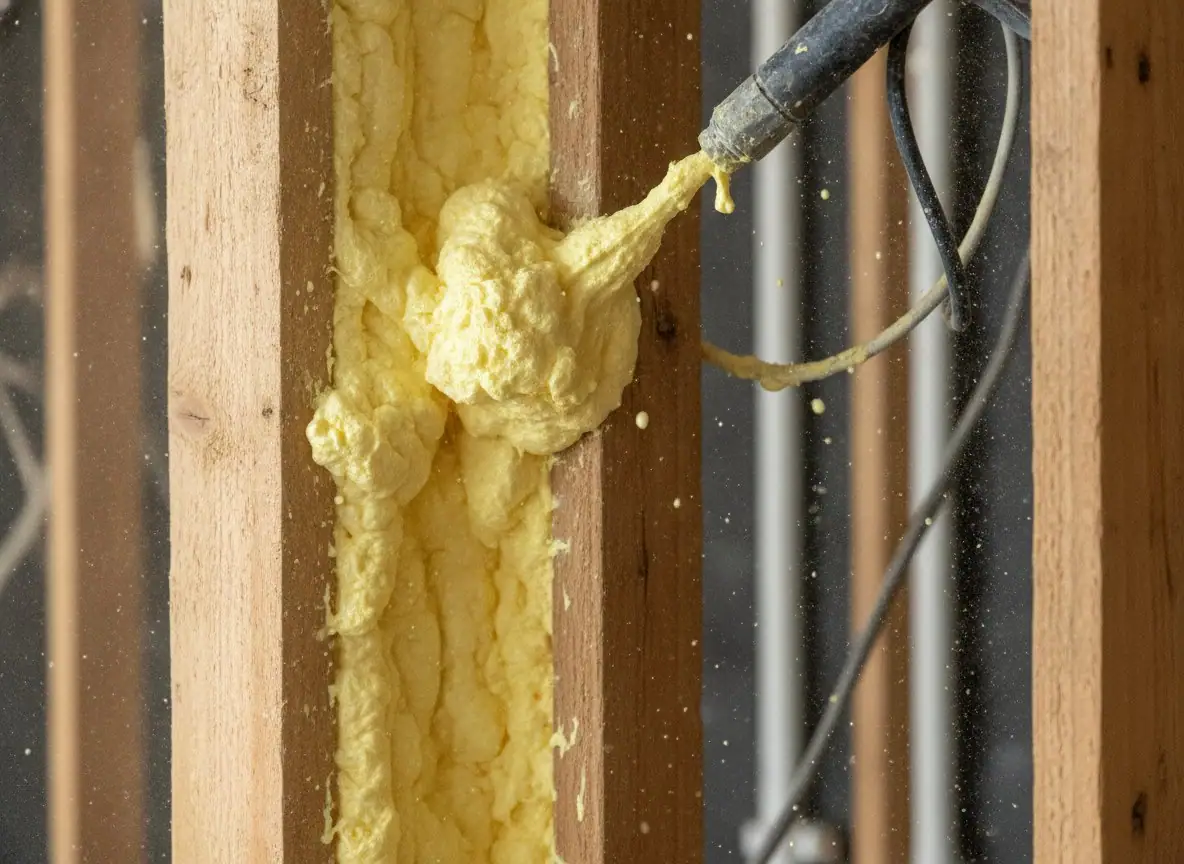
Attic insulation is a system of materials placed in the attic floor, roof deck, or rafter cavities to slow the transfer of heat between the outside environment and the conditioned space of your home. The performance of insulation is measured in R-value — a rating that quantifies thermal resistance. The higher the R-value, the greater the resistance to heat flow.
Modern attic insulation materials have evolved dramatically from the basic fiberglass batts used in mid-century construction. Today, contractors work with blown-in fiberglass, cellulose, open-cell and closed-cell spray foam, mineral wool, and hybrid systems that combine multiple materials for maximum performance. Each material interacts differently with framing members, ventilation systems, and moisture conditions — factors that are especially relevant in Calabasas’s Mediterranean climate.
Read moreShow less
Calabasas was incorporated as a city in 1991, but much of its residential development occurred in two major waves: the 1970s–1980s tract-home expansion along the US-101 corridor and the luxury custom-home boom of the 1990s through the 2000s. Homes built during the earlier wave were often insulated to the then-standard of R-19 or R-22 in the attic — well below the R-38 currently recommended by California’s Title 24 energy code and the R-49 to R-60 that climate-zone-specific guidance suggests for Inland Valley exposures.
Calabasas sits within California’s Climate Zone 9 as defined by the California Energy Commission, a zone characterized by hot, dry summers with occasional extreme heat events, mild winters with limited but meaningful rainfall, and persistent wind events that accelerate thermal exchange in poorly sealed attic systems. This climate context makes proper attic insulation not only a comfort measure but a direct contributor to reducing peak electricity demand — something Southern California Edison customers know well when summer rate tiers kick in.
Beyond thermal performance, attic insulation plays a meaningful role in acoustic dampening — particularly relevant for homes near the US-101 Freeway corridor through Calabasas, where traffic noise can penetrate inadequately insulated rooflines. Properly installed insulation reduces airborne sound transmission, keeping interior living spaces quieter and more livable.
Why Attic Insulation Is Needed in Calabasas, CA
Extreme Summer Heat in the Las Virgenes Valley
The City of Calabasas occupies a transitional zone between the coastal influence of the Pacific Ocean and the intense inland heat of the San Fernando Valley. On peak summer days, temperatures in the Calabasas Highlands, Mulwood, and Park Moderne neighborhoods regularly reach 102°F to 108°F, while coastal communities just twelve miles west remain 15–20°F cooler. An attic without adequate insulation can reach internal temperatures of 140°F to 160°F during these peak periods, effectively turning the attic into a radiant heater that pushes heat directly into upper-floor living spaces.
Santa Ana Wind Events
The Santa Ana wind events — which typically occur between October and March and can produce sustained winds of 40–60 mph with gusts exceeding 80 mph through Malibu Canyon and Calabasas Pass — do more than raise wildfire risk. They create significant negative pressure differentials that pull conditioned air out of poorly sealed attics and force unconditioned outside air into living spaces. The 2018 Woolsey Fire, which burned approximately 96,949 acres across portions of Calabasas, Agoura Hills, and Malibu, destroyed or damaged hundreds of homes and prompted widespread rebuilding — much of which required compliance with updated Title 24 insulation standards. Homeowners who rebuilt after the Woolsey Fire often report dramatically lower utility bills compared to their pre-fire structures, largely due to upgraded attic insulation.
Aging Housing Stock and Code Evolution
A significant portion of Calabasas’s residential housing stock was built between 1972 and 1989, when California’s energy codes were far less stringent. Tract homes in neighborhoods like Calabasas Park, Viewpoint Estates, and the areas adjacent to Las Virgenes Road were typically insulated to R-11 or R-19 — values that modern energy science recognizes as grossly insufficient for Zone 9 conditions. Over four to five decades, blown-in insulation in these homes has settled, compacted, or been disturbed by HVAC servicing, reducing effective R-values even further.
Wildfire Smoke and Air Quality
The Woolsey Fire and subsequent regional fire events demonstrated another reason attic insulation matters in Calabasas: air sealing. Homes with poorly sealed attics allow smoke particulates to infiltrate living spaces far more rapidly than tightly sealed, well-insulated homes. Proper attic insulation — particularly spray foam applied at the roofline — dramatically reduces this infiltration pathway, protecting indoor air quality during the increasingly frequent poor-air events that affect the greater Santa Monica Mountains corridor.
Utility Cost Pressure
Southern California Edison’s tiered rate structure, combined with the Time-of-Use rates increasingly applied to residential accounts, means that air conditioning usage between 4:00 PM and 9:00 PM on summer weekdays is charged at premium rates. A properly insulated Calabasas attic — achieving R-49 or higher — can reduce peak cooling load by 20% to 40%, translating directly to lower monthly bills and reduced demand charge exposure.
Free, no-obligation estimates
Talk to Best Price Insulation
Tell us what you need and we’ll take it from there.
Signs You Need Attic Insulation in Calabasas
Thermal Comfort Issues
- Upper-floor rooms remain 5°F or more warmer than lower floors despite air conditioning running continuously
- Air conditioning cycles more than 3–4 times per hour on days above 95°F
- Ceiling surfaces feel noticeably warm to the touch in summer
Energy Bill Indicators
- Summer electricity bills exceeding $300–$400 per month for a typical 2,000–3,000 sq ft Calabasas home
- Year-over-year bill increases that cannot be explained by rate changes alone
- HVAC system running longer than expected per day
Visual and Physical Signs
- Existing attic insulation depth below 10 inches (indicating R-value below R-30)
- Visible gaps, voids, or compressed insulation around HVAC ducts, light fixtures, or attic hatches
- Pest activity — rodents disturb and displace insulation, a common issue in the Santa Monica Mountains interface zone
- Moisture staining or mold on attic decking
Urgency Indicators
- Home was built before 1990 and insulation has never been upgraded
- Recent wildfire smoke infiltration noticed during regional fire events
- HVAC system replacement planned — pairing insulation upgrades with HVAC replacement maximizes ROI
Our process
Our Attic Insulation Process in Calabasas
- 01
Free Attic Assessment (Day 1 — 60 to 90 Minutes)
Our technician accesses your attic through the existing hatch or pull-down stair, measures existing insulation depth at multiple points, photographs any damage or deficiencies, assesses ventilation adequacy, and checks for signs of pest activity or moisture in
- 02
Insulation Removal (if Required — Same Day or Day 2)
If existing insulation is contaminated by rodent activity, fire-event ash infiltration, or moisture damage, our team uses commercial HEPA-filtered vacuum equipment to perform insulation removal safely. All waste is bagged, sealed, and transported per Los Angel
- 03
Air Sealing (Day 2 — 2 to 3 Hours)
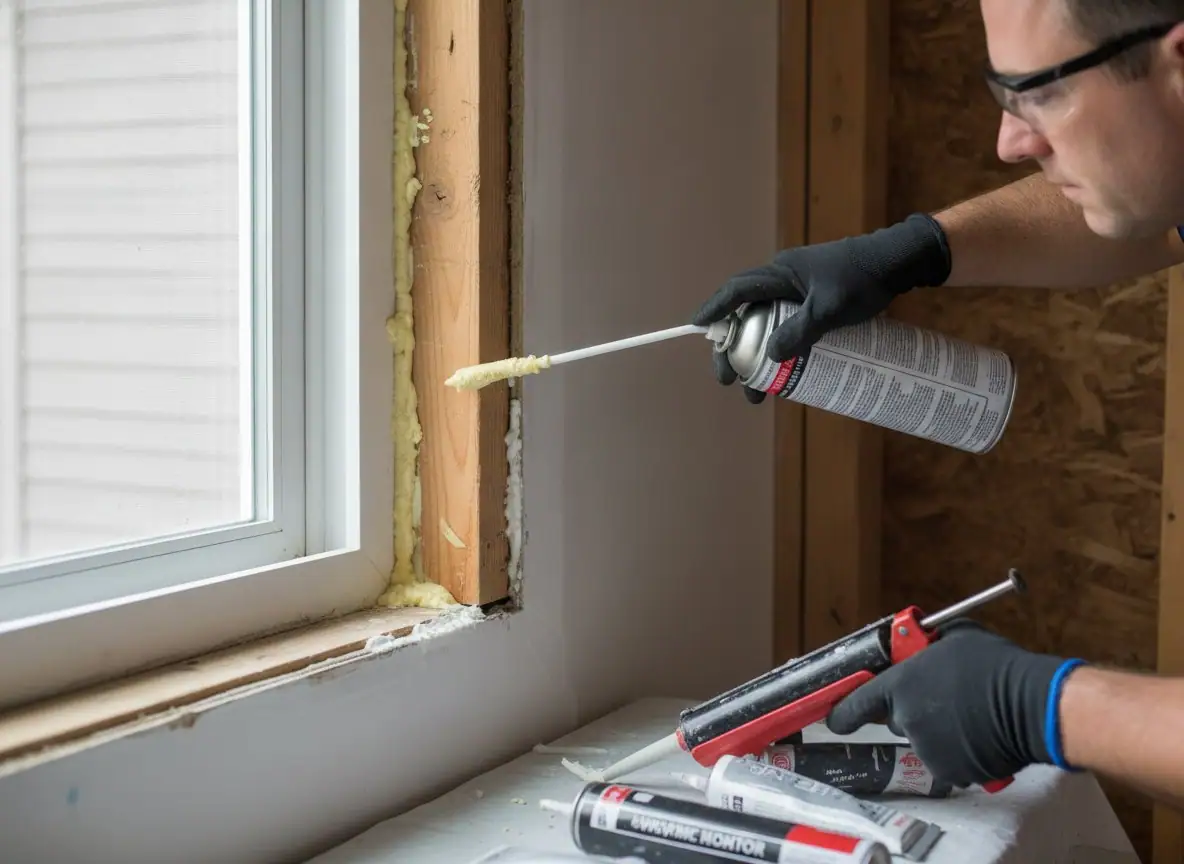
Before any insulation is installed, our crew seals all penetrations, gaps around top plates, HVAC boot connections, and recessed lighting housings using two-part spray foam or fire-rated caulk as appropriate. This step is non-negotiable in Calabasas given the
- 04
Baffle Installation (Day 2 — 1 Hour)
Rafter baffles are installed at all eave locations to maintain the 1-inch minimum ventilation channel required by California Building Code, ensuring that blown-in insulation does not block soffit vents. Proper ventilation is critical in Calabasas’s hot roof en
- 05
Insulation Installation (Day 2 — 2 to 4 Hours)
We install the specified insulation product — blown-in fiberglass, blown-in cellulose, or spray foam — to the depth required to achieve the target R-value. For most Calabasas homes, we target R-49 to R-60 at the attic floor. Depth gauges are installed and visi
- 06
Final Inspection and Documentation (Day 2 — 30 Minutes)
We photograph completed work, provide a written summary of materials installed and R-value achieved, and supply documentation suitable for submission to Southern California Edison’s Home Energy Improvement Program rebate applications.
- 07
Post-Installation Check-In (14 Days After)
We follow up to confirm customer satisfaction and address any questions about the insulation’s performance during the first billing cycle.
Attic Insulation Methods We Use in Calabasas
Blown-In Fiberglass
Blown-in fiberglass is the most common method for upgrading existing Calabasas attics. Loose fiberglass particles are machine-blown to a uniform depth, filling gaps and irregular framing spaces effectively. It achieves approximately R-2.5 per inch, meaning a 20-inch depth delivers approximately R-49. This method is ideal for the flat attic floors found in the 1970s–1980s tract homes throughout Calabasas Park and Mulwood.
Blown-In Cellulose
Blow-in insulation using cellulose — a recycled-paper-based product — offers slightly higher R-value per inch (approximately R-3.2 to R-3.8) and superior air-flow resistance. It is a good fit for homes where attic depth is limited or where a higher-density product is preferred for sound dampening near the US-101 corridor.
Spray Foam Insulation
Spray foam insulation — specifically closed-cell spray foam applied at the underside of roof decking — creates an unvented attic assembly that is gaining popularity in Calabasas due to its superior air sealing properties and wildfire smoke infiltration resistance. Closed-cell foam achieves R-6 to R-7 per inch. This method is particularly suited to luxury custom homes in The Oaks of Calabasas and Calabasas Highlands where HVAC equipment is located in the attic space itself.
Learn moreHybrid Systems
A combination of closed-cell spray foam at the roof deck (2–3 inches) topped by blown-in insulation on the attic floor delivers maximum R-value, air sealing, and moisture management — the optimal solution for large homes in North Ranch or Monte Nido where both performance and moisture management are priorities.
Attic Insulation Cost in Calabasas, CA
Understanding attic insulation cost in Calabasas requires looking at several variables that directly affect the final price.
Typical Price Ranges
- Blown-in fiberglass (attic upgrade to R-49): $1.50–$2.50 per square foot installed. A 1,500 sq ft attic: approximately $2,250–$3,750.
- Blown-in cellulose (attic upgrade to R-49): $1.75–$2.75 per square foot installed.
- Spray foam (closed-cell, roof deck application): $4.00–$7.00 per square foot depending on thickness.
- Insulation removal (prior to reinstallation): $1.00–$2.00 per square foot.
- Air sealing (standalone service): $500–$1,500 depending on attic complexity.
Factors That Affect Calabasas Attic Insulation Cost
- Attic accessibility: Low-pitch rooflines on 1970s ranch homes in Calabasas may require additional labor time due to restricted crawl space within the attic.
- Existing insulation condition: Rodent contamination or post-fire ash deposits require full removal before reinstallation — adding cost.
- Tile roof structures: Spanish tile and concrete tile roofs common throughout Calabasas create specific attic configurations that may require custom baffle solutions.
- Home size: Calabasas homes average 2,800–4,500 sq ft, placing most projects in the mid-to-upper cost range relative to the region.
Read moreShow less
Available Rebates
Southern California Edison offers rebates through its Energy Savings Assistance and Home Energy Improvement programs. Qualifying Calabasas homeowners may receive $0.10–$0.25 per square foot in rebates. Best Price Insulation can provide documentation needed for rebate applications. Contact us at (818) 696-4154 for a detailed estimate.
Attic Insulation Service Areas Within and Near Calabasas
The Oaks of Calabasas
This gated community features large custom homes built predominantly in the late 1990s through 2000s. While newer than the city’s original housing stock, many of these homes have attic-mounted HVAC systems that benefit significantly from spray foam at the roofline — converting the attic from a vented to an unvented conditioned space and eliminating duct-loss energy penalties.
Calabasas Highlands
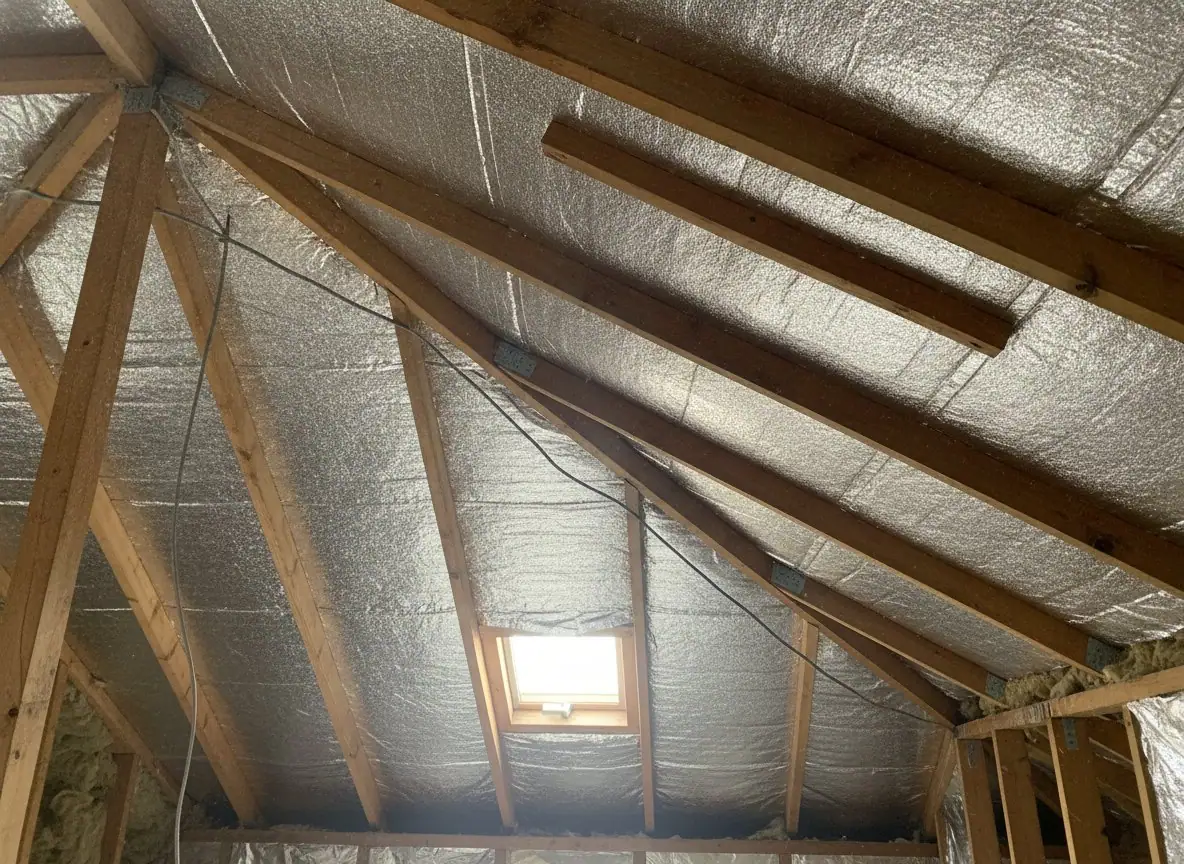
Perched on the Santa Monica Mountains slope, Calabasas Highlands homes experience the most extreme temperature differentials in the city. South-facing roof exposures can reach surface temperatures exceeding 165°F on peak summer days. Radiant barriers paired with blown-in insulation are particularly effective here.
Mulwood and Calabasas Park
These late-1970s and early-1980s neighborhoods contain the oldest housing stock in the city. Most homes were originally insulated to R-11 to R-19. These neighborhoods represent the highest concentration of homes in need of full attic insulation upgrades in Calabasas.
Surrounding Communities We Serve
We also provide attic insulation services in Agoura Hills, Westlake Village, Hidden Hills, Malibu, Woodland Hills, and throughout the greater West Valley.
Attic Insulation Maintenance Tips for Calabasas Homeowners
- Inspect annually before fire season (May–June): Check attic for signs of pest intrusion, as rodents from the Santa Monica Mountains interface actively disturb insulation. Look for tunneling, nesting, or compressed areas.
- Check attic hatch weatherstripping yearly: The attic hatch is the single largest thermal bypass point in most Calabasas homes. Replace foam tape weatherstripping every 3–5 years.
- Verify soffit vents are clear after Santa Ana wind events: Debris from high-wind events can block soffit vents, reducing ventilation and causing moisture buildup during winter rains.
- Do not store items on top of attic insulation: Even modest compression reduces R-value measurably — a common issue in Calabasas homes where attics double as storage spaces.
- Have HVAC ducts sealed and inspected every 5 years: Leaky ducts in an unconditioned attic can negate up to 30% of the benefit of new insulation.
- After any wildfire smoke event, inspect insulation: If ash or smoke infiltration occurred, have a professional assess whether insulation replacement is needed.
- Keep attic access ladder lubricated and sealed: Pull-down stair units are notorious air leakage points; an insulated cover box adds measurable performance improvement.
Why Choose Best Price Insulation for Attic Insulation in Calabasas
Best Price Insulation has built its reputation serving homeowners throughout the Las Virgenes Valley and the greater San Fernando Valley with straightforward pricing, quality materials, and crews who understand the specific challenges of Southern California’s high-fire, high-heat residential environment.
We work across all insulation types — from blown-in cellulose upgrades in a 1978 Mulwood tract home to full closed-cell spray foam systems in a custom Calabasas Highlands estate. Our technicians are familiar with the architectural conventions of every neighborhood we serve and approach each project with the diagnostic rigor of a building-science-informed assessment rather than a simple sales call.
Read moreShow less
We provide transparent, itemized written estimates before any work begins. We also support customers through the Southern California Edison rebate application process. Our service area covers all of Calabasas and extends to Agoura Hills, Westlake Village, Hidden Hills, Malibu, Woodland Hills, West Hills, Thousand Oaks, and the broader West Valley region.
Call Best Price Insulation at (818) 696-4154 today for your free attic assessment.
FAQ
Frequently Asked Questions: Attic Insulation in Calabasas, CA
How much does attic insulation cost in Calabasas?
For a typical Calabasas home of 2,000–3,000 sq ft, blown-in attic insulation upgrades to R-49 generally range from $3,000 to $6,500 depending on existing conditions, accessibility, and whether old insulation must be removed. Spray foam systems run higher — $6,000 to $15,000+ for full roof-deck applications. We provide free, itemized estimates with no obligation.
What R-value do I need for my Calabasas attic?
Calabasas falls within California Energy Commission Climate Zone 9. California’s Title 24 code requires a minimum of R-38 for attic insulation in existing homes, but current best-practice guidance — and the standard we recommend — is R-49 to R-60 for the attic floor in a vented attic assembly. Homes with HVAC in the attic benefit from a spray foam unvented assembly instead.
How long does attic insulation installation take?
Most Calabasas attic insulation projects are completed in a single day. If old insulation removal is required, we typically schedule removal on day one and new installation on day two. There is no need for homeowners to vacate the property during installation.
Does my Calabasas home need insulation removal before adding new insulation?
Not always. If existing insulation is clean and undamaged, we can blow new material directly over it to bring the total depth to target R-value. However, if there is evidence of rodent contamination (a common issue near the Santa Monica Mountains open space), post-fire ash infiltration, or mold, insulation removal is required first for both safety and performance reasons.
Will new attic insulation help with the heat on upper floors of my home?
Yes, significantly. Upper-floor overheating is the most common complaint we hear from Calabasas homeowners, particularly in two-story homes in The Oaks and Calabasas Highlands. A properly insulated attic reduces the radiant heat load on upper-floor ceilings by 40% to 60%, often reducing the temperature differential between floors by 4–8°F within the first billing cycle.
Can attic insulation help reduce wildfire smoke infiltration?
Air sealing performed as part of an attic insulation upgrade directly reduces smoke infiltration pathways. Closed-cell spray foam applied at the roof deck — creating an unvented attic assembly — is the most effective solution for smoke infiltration reduction, a particularly relevant concern for Calabasas homeowners following the Woolsey Fire of 2018 and ongoing regional fire risk.
Are there rebates available for attic insulation in Calabasas?
Southern California Edison customers may qualify for rebates through the Home Energy Improvement Program, which can offset a portion of insulation upgrade costs. Rebate amounts and eligibility criteria change periodically. Best Price Insulation provides the documentation and R-value certifications required for rebate submissions. Call us at (818) 696-4154 for current rebate information.
Do you also insulate crawl spaces in Calabasas?
Yes. Many older Calabasas homes have raised foundations with crawl space areas that also need attention. We offer crawl space insulation and crawl space encapsulation services throughout Calabasas and surrounding communities.
Get a Free Attic Insulation Estimate in Calabasas Today
If your Calabasas home is uncomfortable in summer, your energy bills are climbing, or your insulation hasn’t been evaluated in more than ten years, now is the time to act. Best Price Insulation provides free, no-obligation attic assessments throughout Calabasas and the surrounding communities — including Agoura Hills, Hidden Hills, Westlake Village, Woodland Hills, and Malibu.
Our team will assess your current insulation levels, identify air sealing deficiencies, and provide a transparent written estimate so you can make an informed decision. We handle blown-in insulation, spray foam, insulation removal, and crawl space services — all backed by the expertise and pricing transparency that Calabasas homeowners trust.
Call Best Price Insulation today at (818) 696-4154 or request your free estimate online. Stay cool, save energy, and protect your home — starting with your attic.
Get in touch
Find insulation help near you
Request a free estimate online or give us a call — our team will follow up quickly.
- Call us(818) 696-4154
- Visit26635 W Agoura Rd, Calabasas, CA 91302
- HoursMon-Sun 07:00-19:00