
Radiant Barrier Insulation in Calabasas, CA
Energy-Saving Radiant Barrier Insulation for Calabasas, CA Homes — Licensed & Insured
Best Price Insulation installs radiant barrier insulation in Calabasas, CA. Free attic assessment. Call (818) 696-4154 for a written quote today.
Radiant barrier insulation is one of the most effective tools Calabasas homeowners can use to fight summer heat gain in an attic. Best Price Insulation, an insulation contractor in Calabasas, CA serving surrounding communities, installs, inspects and assesses radiant barriers for both residential and commercial properties. This page explains what a radiant barrier does, whether your attic needs one, what the installation involves and how to get a free written quote.
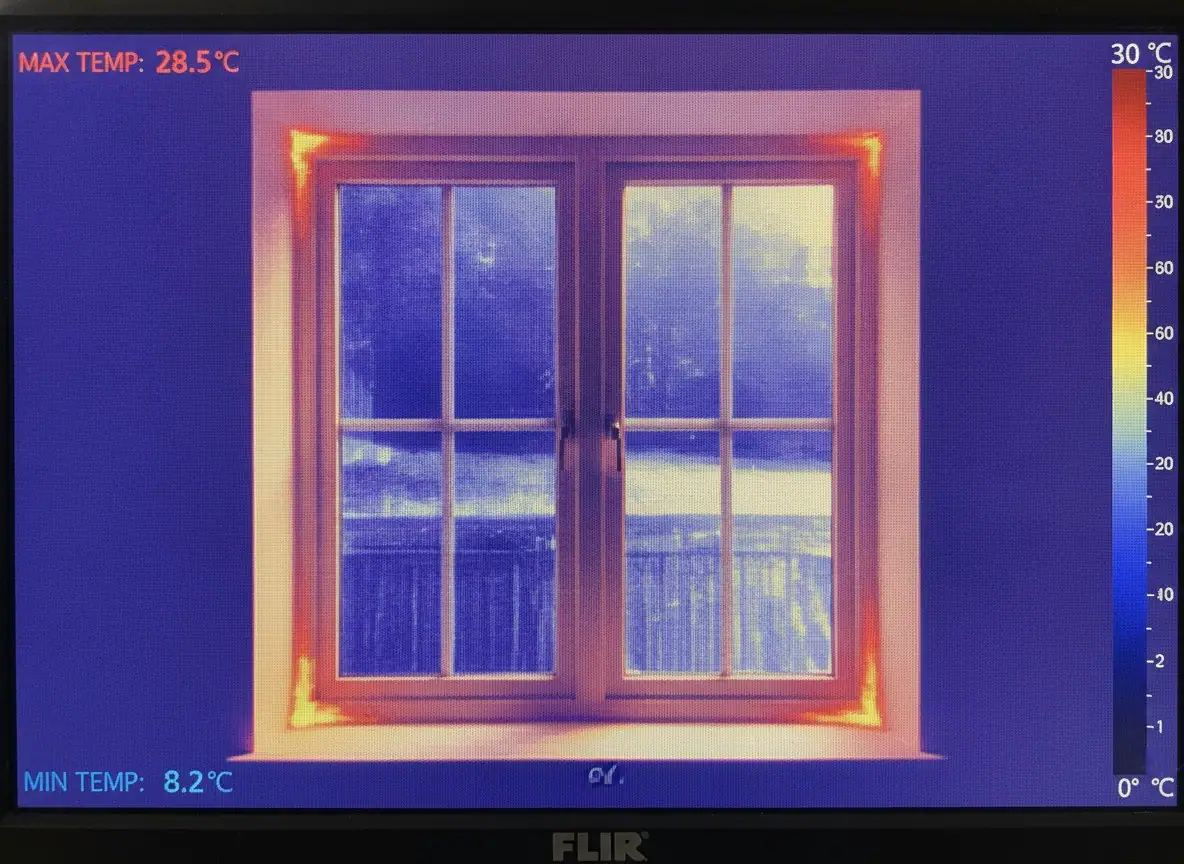
What is a radiant barrier and how does it work?
A radiant barrier is a highly reflective material — most commonly thin aluminum foil — that reflects radiant heat instead of absorbing it. Unlike mass insulation such as fiberglass batts or blown-in cellulose, a radiant barrier does not slow heat by trapping air; it bounces heat energy back toward its source before that energy can conduct into your living space.
The physics require one critical condition: the reflective surface must face an open air space. Without that air gap, the foil conducts heat rather than reflects it, and performance drops sharply. Picture the attic as a layered assembly from outside in:
- Roof deck (absorbs solar energy and re-radiates heat downward as infrared)
- Open air space (required — minimum 1 inch, ideally 3–4 inches)
- Radiant barrier foil facing the air space
- Attic floor or ceiling joists below
- Living space ceiling
Read moreShow less
When the foil faces the air space, it reflects up to 97 percent of radiant heat back toward the roof deck rather than allowing it to reach the attic floor insulation. Perforated versions allow moisture vapor to pass through; solid foil versions block vapor entirely. That distinction matters for installation placement, which we cover under installation steps below. If you want to see how the layer beneath the barrier is handled, our floor insulation page explains that side of the attic.
Understanding what a radiant barrier does — and what it does not do — helps you decide whether your attic actually needs one.
Do I need a radiant barrier in my attic?
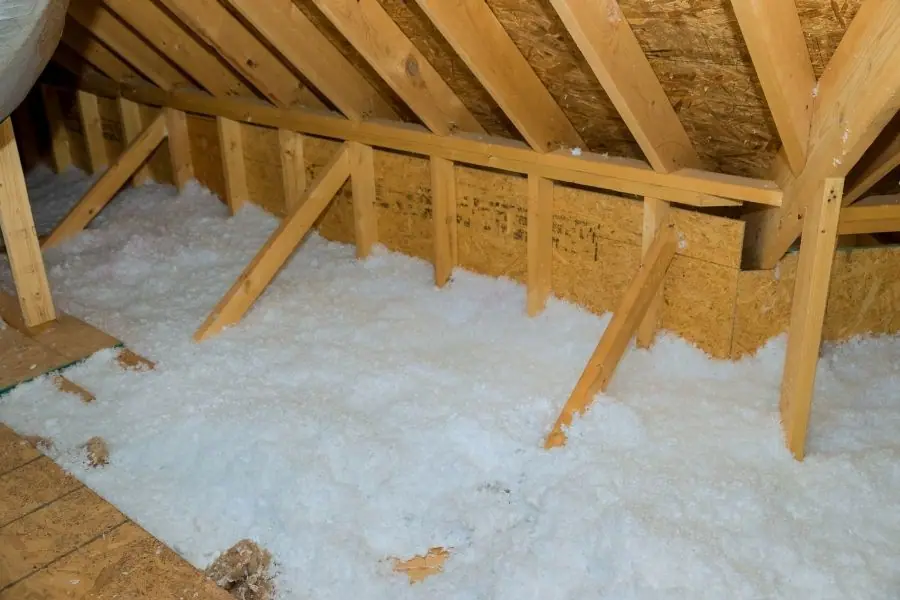
Your Calabasas attic is a strong candidate for a radiant barrier if your air-conditioning runs heavily from late spring through early fall, your attic temperature regularly exceeds outdoor temperature by 30°F or more, and your existing attic insulation is at or above recommended levels yet the upstairs rooms still feel hot. When existing mass insulation is already thick, additional blown-in insulation returns very little benefit — a radiant barrier addresses the radiant heat load that mass insulation alone cannot stop.
Your attic is also a strong candidate if it contains HVAC ducts. Ducts running through a 150°F attic lose significant conditioned air before it reaches your rooms. A radiant barrier that drops attic temperature by 20–30°F measurably reduces duct heat gain.
Read moreShow less
Your attic is a weaker candidate if the existing insulation is thin (under R-19), if the roof has heavy shading all day, or if your climate is predominantly cool. In those cases, adding mass insulation first delivers a better return. Because Calabasas sits in the inland Santa Monica Mountains foothills with long, dry, sunny summers, radiant barriers are particularly well suited here — which the next section explains in detail.
Free, no-obligation estimates
Talk to Best Price Insulation
Tell us what you need and we’ll take it from there.
Why radiant barriers suit hot Calabasas summers
Calabasas experiences some of the hottest attic conditions in Los Angeles County. The community sits in a semi-arid inland valley where summer temperatures routinely reach the high 90s°F, solar intensity is high due to low humidity and clear skies, and Santa Ana wind events can push temperatures above 100°F as late as October. Those conditions drive radiant heat loads that overwhelm the capacity of mass insulation alone.
Homes in Calabasas, Hidden Hills, Agoura Hills and neighboring Westlake Village were largely built between the 1970s and 2000s with tract-style wood-frame construction and vented attics. Vented attics are exactly the environment where a radiant barrier performs best: the vent airflow sweeps heat that the foil reflects back toward the ridge, pulling the attic temperature down further than foil alone would achieve.
Read moreShow less
We serve Calabasas and all surrounding areas including Woodland Hills, West Hills, Malibu, Topanga, Monte Nido, Thousand Oaks, Moorpark, Simi Valley, Granada Hills, North Ranch, Pacific Palisades, Santa Monica, Beverly Hills, West Hollywood, San Fernando and Culver City. Each community shares similar sun exposure and housing stock, making radiant barriers a consistently high-value upgrade across this region.
Before committing, however, it is worth understanding where radiant barriers fall short.
What are the disadvantages of using a radiant barrier?
A radiant barrier's biggest disadvantage is that it only addresses radiant heat transfer, not conductive or convective heat transfer. On a mild, overcast day it provides almost no benefit. It also does not add R-value, so it cannot replace mass insulation in a cold climate or in a Calabasas home that lacks adequate floor-level attic insulation.
- Dust accumulation: Foil laid flat on attic floor joists collects dust over time, reducing reflectivity by 10–40 percent within a few years if not positioned correctly.
- Moisture risk with solid foil: Solid (non-perforated) foil installed on the attic floor can trap moisture vapor rising from the living space, potentially causing mold or wood decay.
- No winter benefit: In Calabasas winters, a radiant barrier installed on the underside of the roof deck may slightly increase heat loss by reflecting warmth back into the attic instead of letting it radiate down toward the ceiling.
- Returns diminish with heavy existing insulation: If the attic floor already has R-38 or more of blown-in insulation, the marginal gain from adding a radiant barrier is smaller than it would be in a lightly insulated attic.
These disadvantages are manageable with correct product selection and installation method, which is why product type matters as much as the barrier itself.
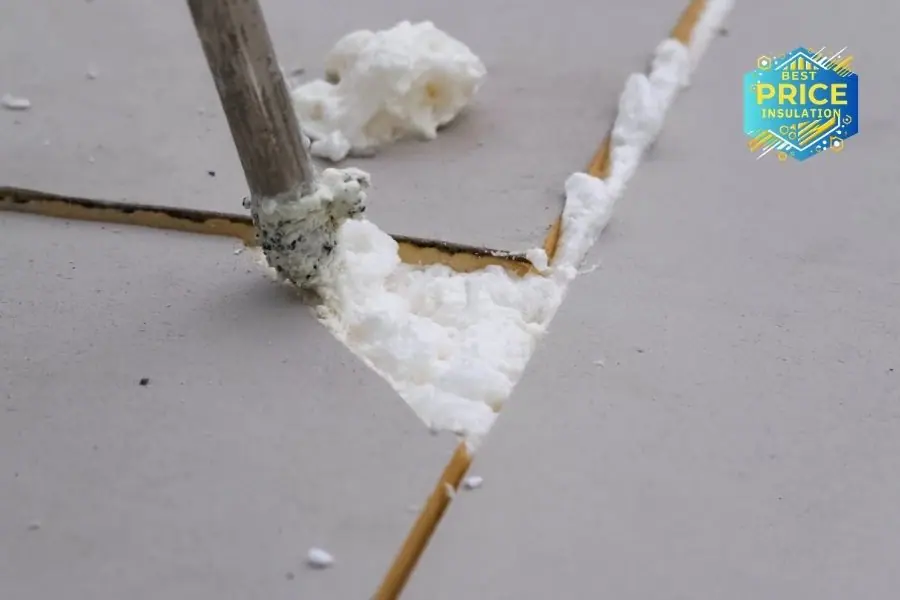
What is the disadvantage of foil insulation?
Foil insulation — whether single-layer radiant barrier foil, double-bubble reflective insulation, or foil-faced board — shares one universal limitation: it must maintain an air gap to function as a radiant barrier. Compress the foil against a solid surface, and the air gap disappears, eliminating the reflective performance. The product then functions only as a minor conductive barrier, with an effective R-value often as low as R-1 to R-2 for thin foil products alone.
Foil also conducts electricity, which means cuts or staples near electrical wiring require care. Single-layer foil tears more easily than reinforced or laminated versions during installation, increasing waste and labor time. FSK insulation (foil-scrim-kraft facing) and foil-backed insulation boards are more durable but add material cost. Understanding these trade-offs makes it easier to compare radiant barriers against other attic solutions, and our page on spray foam details how that option performs and what it involves.
At a glance
Which is better, spray foam or radiant barrier?
Spray foam and radiant barriers solve different problems, and the better choice depends on your attic configuration.
| Factor | Radiant Barrier | Mass Insulation (Blown-in/Batt) | Spray Foam (Closed-cell) |
|---|---|---|---|
| Heat transfer addressed | Radiant only | Conductive and convective | Conductive, convective, and air |
| R-value added | None on its own | High (R-13 to R-60+) | High (R-6 to R-7 per inch) |
| Air sealing | No | No (requires separate air sealing) | Yes (closed-cell) |
| Best attic type | Vented attic with ductwork | Vented attic with flat floor | Unvented (conditioned) attic |
| Moisture control | Perforated versions allow vapor | Depends on facing | Excellent vapor barrier |
| Relative installed cost | Lower | Lower to moderate | Higher |
| Works in winter | Limited | Yes | Yes |
For most Calabasas vented attics with existing floor insulation, a radiant barrier is the right next step. Spray foam makes more sense when creating a conditioned attic enclosure to bring ductwork inside the thermal envelope. Some homeowners are now removing spray foam for reasons worth knowing.
Why are people removing spray foam insulation?
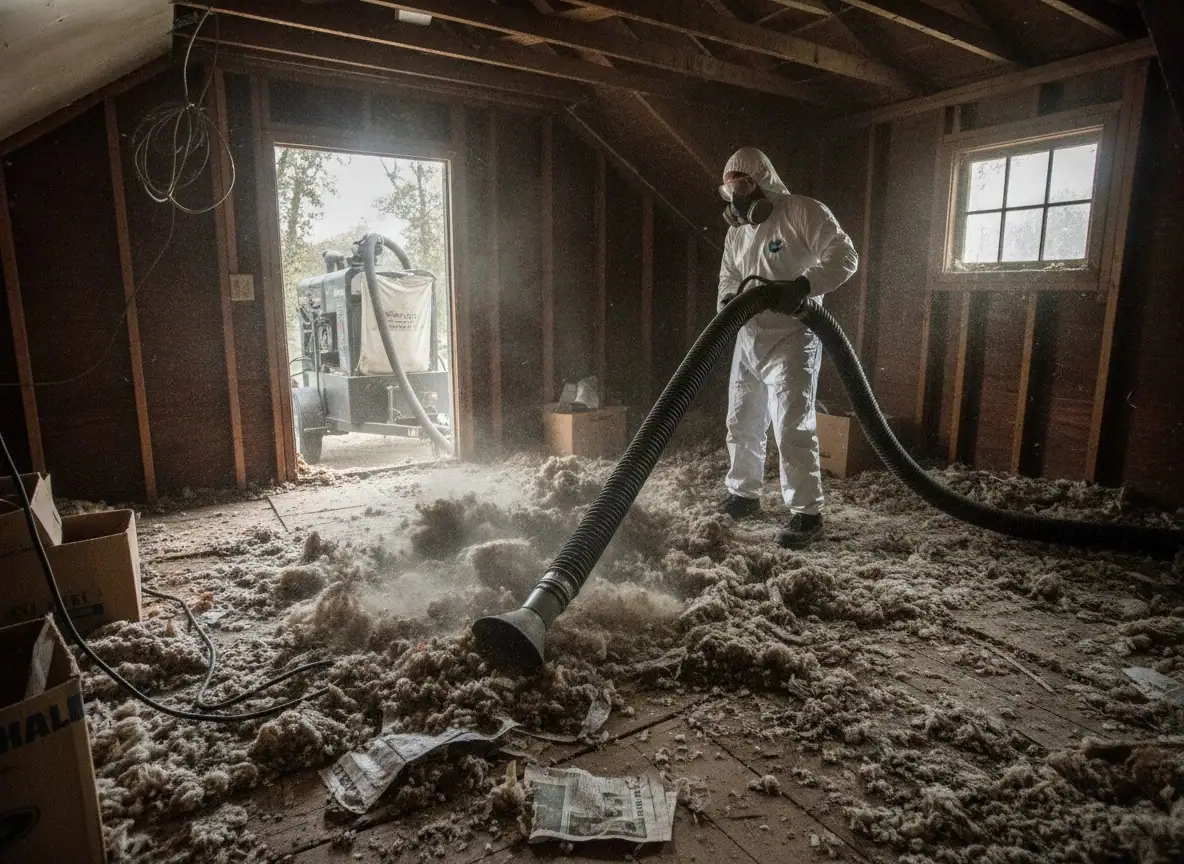
Homeowners remove spray foam primarily because of off-gassing concerns from improperly mixed product, difficulty inspecting the roof structure it covers, or conflicts with reroofing work. Closed-cell spray foam applied directly to roof decking as roof insulation makes it nearly impossible to inspect for moisture damage or rot without destructive removal. When a roof needs replacement, the foam must come off first, adding significant cost. Some homeowners also discover that spray foam applied incorrectly — wrong mix ratio, applied too thick per pass, or in extreme temperatures — does not fully cure, leaving sticky residue that never performs correctly. Best Price Insulation can assess your existing attic insulation condition as part of a free inspection and advise whether removal is warranted before installing a radiant barrier.
When should you not use a vapor barrier?
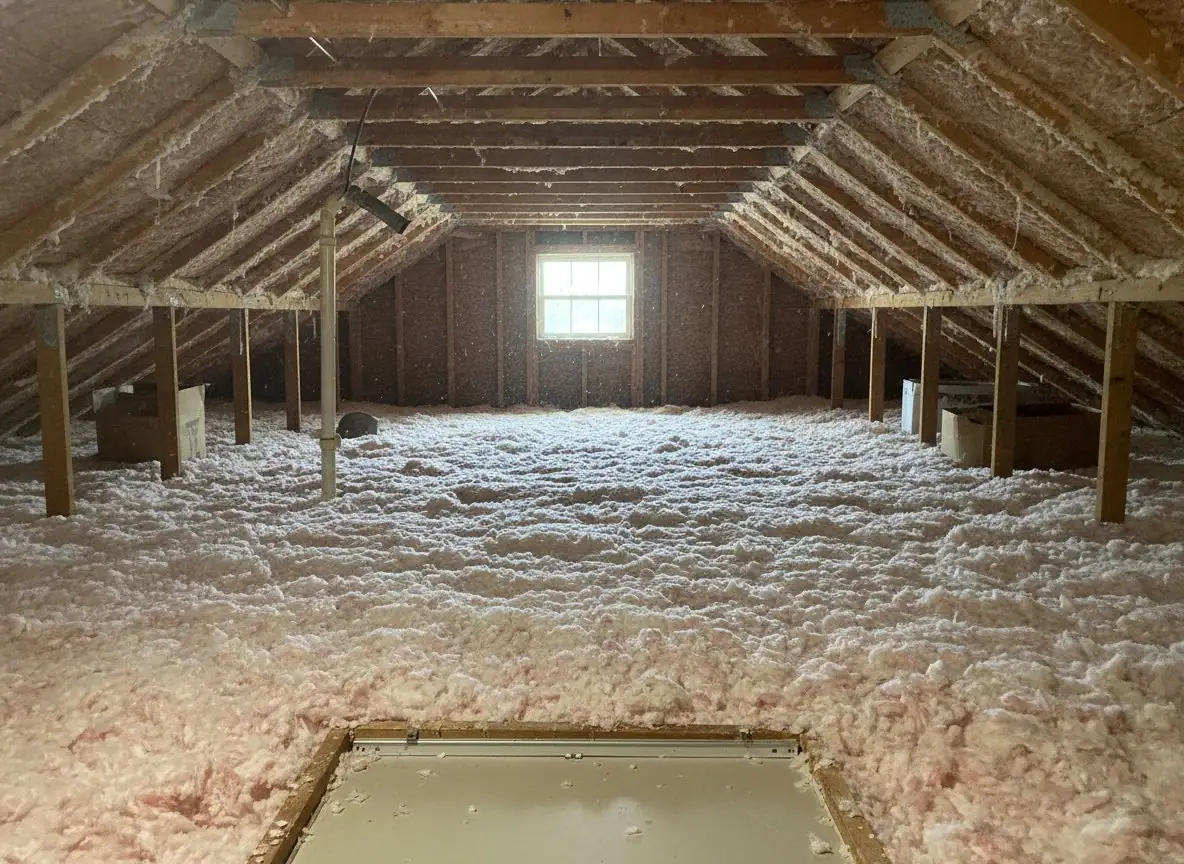
You should not use a solid vapor barrier — including solid (non-perforated) radiant barrier foil — when it would trap moisture between two impermeable layers, or when the existing attic already has adequate vapor control. In Calabasas, the mild and dry climate means vapor drive is relatively low compared to humid climates. The practical rule: if you install a solid radiant barrier foil on the attic floor joists, moisture vapor rising from the living space below can condense on the underside of the foil. Use perforated foil in that position. Solid foil is appropriate on the underside of the roof deck (stapled to the rafters) because moisture vapor can still exit through ridge and soffit vents.
At a glance
Radiant barrier types: foil rolls, bubble/foam-core and foil-faced products
Several distinct product families carry the "radiant barrier" label, and they differ significantly in performance, installation method and appropriate application.
| Product Type | Common Names | Structure | Best Use | Notes |
|---|---|---|---|---|
| Single/double reflective foil rolls | Radiant barrier foil, attic foil, radiant barrier foil rolls | One or two layers of aluminum foil, sometimes with kraft or woven scrim | Stapled to underside of rafters or laid over attic floor insulation | Lowest cost; perforated versions preferred at floor level |
| Bubble/foam-core reflective | Double bubble insulation, reflectix insulation, reflectix radiant barrier, aircell insulation | Foil faces on either side of bubble polyethylene or foam core | Crawl spaces, ducts, garage doors, tight spaces | Adds minimal R-value; air gap still required for radiant performance |
| Foil-faced rigid board | Foil backed insulation, foil faced insulation, insulation board | Polyiso, EPS or XPS board with foil facing | Roof deck underside, walls, garage applications | Combines meaningful R-value with radiant reflection |
| FSK laminate | FSK insulation, thermal wrap, reflective barrier insulation | Foil-scrim-kraft laminate, often used as facing on batts or duct wrap | Duct insulation, vapor retarder facing | Durable; not a standalone insulation product |
Products such as Reflectix and similar double-bubble formats are frequently sold at retail in rolls sized for DIY projects; however, their reflective performance depends entirely on maintaining an air gap, and incorrect installation eliminates that gap. Professional installation ensures the air gap is maintained and the product is correctly positioned for your specific attic geometry.
How is a radiant barrier installed?
Radiant barrier installation follows a defined sequence that protects performance and durability. Here is how Best Price Insulation approaches a standard Calabasas attic installation:
- Free attic assessment: We inspect attic access, rafter spacing, existing insulation depth, duct locations, ventilation adequacy (soffit and ridge vents) and any signs of moisture, pest activity or prior damage.
- Ventilation verification: Before installing foil, we confirm that soffit vents and ridge vents are clear and unblocked. A radiant barrier in a poorly vented attic traps reflected heat with nowhere to go, reducing efficiency. This step is what separates a professional installation from a DIY shortcut.
- Material selection: We select perforated or solid foil and the appropriate product type based on attic geometry, existing insulation and duct locations.
- Rafter-staple method (most common): Foil rolls are stapled to the underside of roof rafters, leaving the foil face pointed downward toward the attic floor air space. Seams overlap 2–3 inches and are sealed or doubled to prevent gaps.
- Attic floor method (alternative): Where rafter access is limited, perforated foil is draped over existing floor insulation, maintaining the air gap above. This method is faster but slightly less effective because dust can accumulate on the upward-facing surface.
- Duct wrapping (if applicable): Exposed ductwork is wrapped with foil-faced duct insulation or FSK laminate to reduce direct radiant heat gain to the duct exterior.
- Final inspection and air gap confirmation: Every section is checked to confirm the air gap is maintained and no foil is compressed against a solid surface.
Installation typically requires attic access only and does not disrupt the living space. After installation, the question homeowners ask next is what it will cost.
At a glance
How much does a radiant barrier cost in Calabasas?
We do not publish flat rates because every attic is different. Best Price Insulation provides a written quote after a free inspection. The factors that drive the final cost are explained below.
| Cost Factor | Why It Affects Price |
|---|---|
| Attic square footage | Larger attics require more material and more labor hours |
| Roof pitch and rafter height | Steep pitches and low knee-wall areas restrict movement and slow installation |
| Attic access points | Limited or multiple hatches increase setup and staging time |
| Existing insulation depth | Deep existing insulation may need to be cleared or worked around at the floor level |
| Product type selected | Perforated foil rolls cost less than foil-faced rigid board or double-bubble products |
| Duct wrapping scope | Number and length of exposed ducts adds material and labor |
| Pre-existing damage or pest activity | Rodent proofing, debris removal or minor repairs required before installation add scope |
| Permit requirements | Los Angeles County or local city permits, if required, add processing time and fees |
Financing is available for qualifying projects. We also assist homeowners in navigating insurance claims when attic damage is involved. The best way to understand your specific cost is to schedule a free attic assessment.
How do I choose a radiant barrier installer?
Choose an installer who performs a full attic inspection before quoting, verifies ventilation before installing, recommends the appropriate product type for your specific attic rather than a one-size approach, and provides a written scope of work with itemized materials. If you want to understand those line items, our materials page describes the insulation types available. Ask whether the installer also handles duct wrapping, rodent proofing and other attic services, since combining work in one visit reduces disruption and overall cost.
Best Price Insulation, serving Calabasas and the surrounding region, offers free inspections, written quotes, 24/7 emergency service, financing options and insurance claim assistance. Our trained technicians handle the full range of attic work within our insulation services in Calabasas — from radiant barriers and blown-in insulation to batt insulation, spray foam and rodent proofing — so your attic can be addressed in one coordinated project rather than multiple contractor visits.
Read moreShow less
Call (818) 696-4154 to schedule your free attic assessment in Calabasas or any of our service areas. We will evaluate your attic, confirm whether a radiant barrier is the right fit, and provide a written quote at no cost.
FAQ
FAQ
Does a radiant barrier work with blown-in attic insulation?
Yes. A radiant barrier installed on the underside of the roof rafters works independently of what is on the attic floor. It reflects heat before it reaches the blown-in insulation layer, reducing the thermal load that the insulation must then slow by conduction. The two products complement each other: the blown-in insulation handles conductive heat transfer; the radiant barrier handles radiant heat. If you are considering adding blown-in insulation to a Calabasas attic that already has some insulation, pairing it with a rafter-stapled radiant barrier typically delivers a better combined result than either product alone.
Is perforated or solid radiant barrier better?
Neither is universally better — the right choice depends on installation position. Perforated foil is preferred when the barrier is installed at the attic floor level or over existing insulation, because moisture vapor rising from the living space can pass through the perforations rather than condensing under the foil. Solid foil is appropriate when stapled to the underside of roof rafters, where attic ventilation through soffit and ridge vents handles moisture movement. Calabasas's dry climate lowers the moisture risk compared to humid regions, but the correct product placement still applies.
Can a radiant barrier go on a roof deck or on attic floor joists?
Both locations work, with trade-offs. On the underside of the roof deck (stapled to rafters), the barrier intercepts heat closest to the source and stays cleaner, maintaining reflectivity longer. On attic floor joists or over existing insulation, installation is faster and less physically demanding, but the upward-facing surface collects dust over time, reducing reflectivity. Rafter-stapled installation is generally preferred for long-term performance in Calabasas attics with good access.
Will a radiant barrier reduce my air conditioning use?
A properly installed radiant barrier typically reduces attic temperatures and lowers the radiant heat load on your ceiling and ductwork, which reduces the work your air conditioner must do to maintain indoor comfort. The reduction is most significant in attics with exposed ductwork. Best Price Insulation does not state specific percentage savings because results vary with attic configuration, existing insulation, thermostat settings and outdoor temperatures. What we can confirm is that the conditions in Calabasas — high solar intensity, long cooling seasons and hot dry summers — are among those where radiant barriers consistently provide measurable benefit.
Can radiant barrier be used in a garage or on ducts?
Yes. Garage doors are a common application for double-bubble reflective products (such as Reflectix-type insulation), which are cut to fit door panels and secured with adhesive. The installation reduces radiant heat gain through the garage door, making attached garages noticeably cooler. Ducts are wrapped with foil-faced duct insulation or FSK thermal wrap, which combines a radiant barrier facing with conductive insulation to reduce heat gain along the duct run. Best Price Insulation handles both applications as part of a broader attic and thermal insulation project.
Why choose us
Why choose Best Price Insulation?
Free estimates
Get a clear, no-obligation estimate before any work begins.
Licensed & insured
Your property and our crew are protected on every project.
Residential & commercial
One team for homes, multi-family and commercial properties.
Locally owned & operated
A local team serving your community and the surrounding area.
Get in touch
Find insulation help near you
Request a free estimate online or give us a call — our team will follow up quickly.
- Call us(818) 696-4154
- Visit26635 W Agoura Rd, Calabasas, CA 91302
- HoursMon-Sun 07:00-19:00